We’d been married a few years, we’d settled into the rhythm of life, and then one day, we look at each other and thought — it’s time for an adventure.
That was us in 1980. Three years married, a little older, maybe a touch wiser, and ready to step out into the world together. France was the obvious choice — a chance for Clare to meet my relatives and for us both to experience something entirely new. For Clare, it was her very first trip abroad, and for me, it was a homecoming of sorts — one that would connect our two worlds and because I’d just bought my first SLR camera, an Olympus OM-1 (which I still own today). Photography was new to me, so forgive the amateur shots in the memories that follow.
Back then, travel felt different. There were no smartphones to guide you, no translation apps, no online maps. Just handwritten notes from Mom, Cecile, who had kindly helped coordinate everything with our family in France, and a paper map that we were certain would make sense once we got there (it didn’t always).
I remember the details like it was yesterday (Clare’s journal helped a lot): Clare’s excitement as she boarded the plane, the novelty of being given red socks to keep warm, and my small indulgence — a glass of cognac when it was offered. I’m quite sure I slept well after that.
That trip would become the start of something special — three weeks that would give us memories still vivid decades later. It wasn’t just a holiday; it was a collection of moments that shaped how we saw travel, family, and each other.
In this story, you’ll step with us into Paris — the long walks, the laughter, the meals shared with cousins, and the kindness of people who welcomed us as though they’d known us all their lives. You’ll see the beauty of the city through Clare’s eyes, taste the wine and the bread, and even meet a chicken that left quite an impression.
This is where it all began — our first international trip, and the first chapter of a lifetime of shared adventures.
Paris Beginnings – Arrival and First Impressions
We touched down at Charles de Gaulle on a cool morning, that familiar mix of exhaustion and excitement buzzing through us. Clare looked out the window, smiling, her eyes wide — France! It still felt slightly unreal.
Armed with Cecile’s handwritten directions, we navigated the metro to Gare du Nord, confident it would be a short walk to Sacré-Cœur. Famous last words. What we thought would be a pleasant stroll turned into a much longer trek, guided by friendly Parisians whose sense of direction seemed more poetic than precise. Still, there was something magical about that first walk — dragging our bags through unfamiliar streets, the smell of bread in the air, and the sound of chatter in a language that felt like music.
When we finally reached our cousin Marguerite’s flat (pictured on left), nestled along the steps facing the Sacré-Cœur cathedral, all the fatigue melted away. Standing there, looking up at that gleaming white basilica against the Paris sky, it felt like a postcard come to life.


Marguerite’s cousins — Pierre and Mireille — greeted us with warmth that erased every ounce of travel weariness. Clare immediately took to Mireille, finding her delightful and full of life. Their laughter came easily, even with a bit of language gap, proof that warmth doesn’t need translation.
That evening, Pierre and Mireille prepared what felt like a feast: roast chicken, hot chips, fresh bread, cheese, grapes, and peaches — simple, hearty, and perfectly French. We lingered at the table, talking, laughing, tasting everything. It wasn’t just a meal; it was a welcome, an introduction to French family hospitality.
After dinner, we wandered through Montmartre, the hill alive with artists and music. Mireille pointed out spots she loved and chuckled as she remarked how much I resembled Cecile. We stopped at the steps of Sacré-Cœur, the city spread out below us, twinkling as dusk settled. Clare was captivated — by the cathedral’s stained-glass windows, by the artists sketching portraits in the square, by the people sitting in cafés, sipping coffee as if time had slowed just for them.

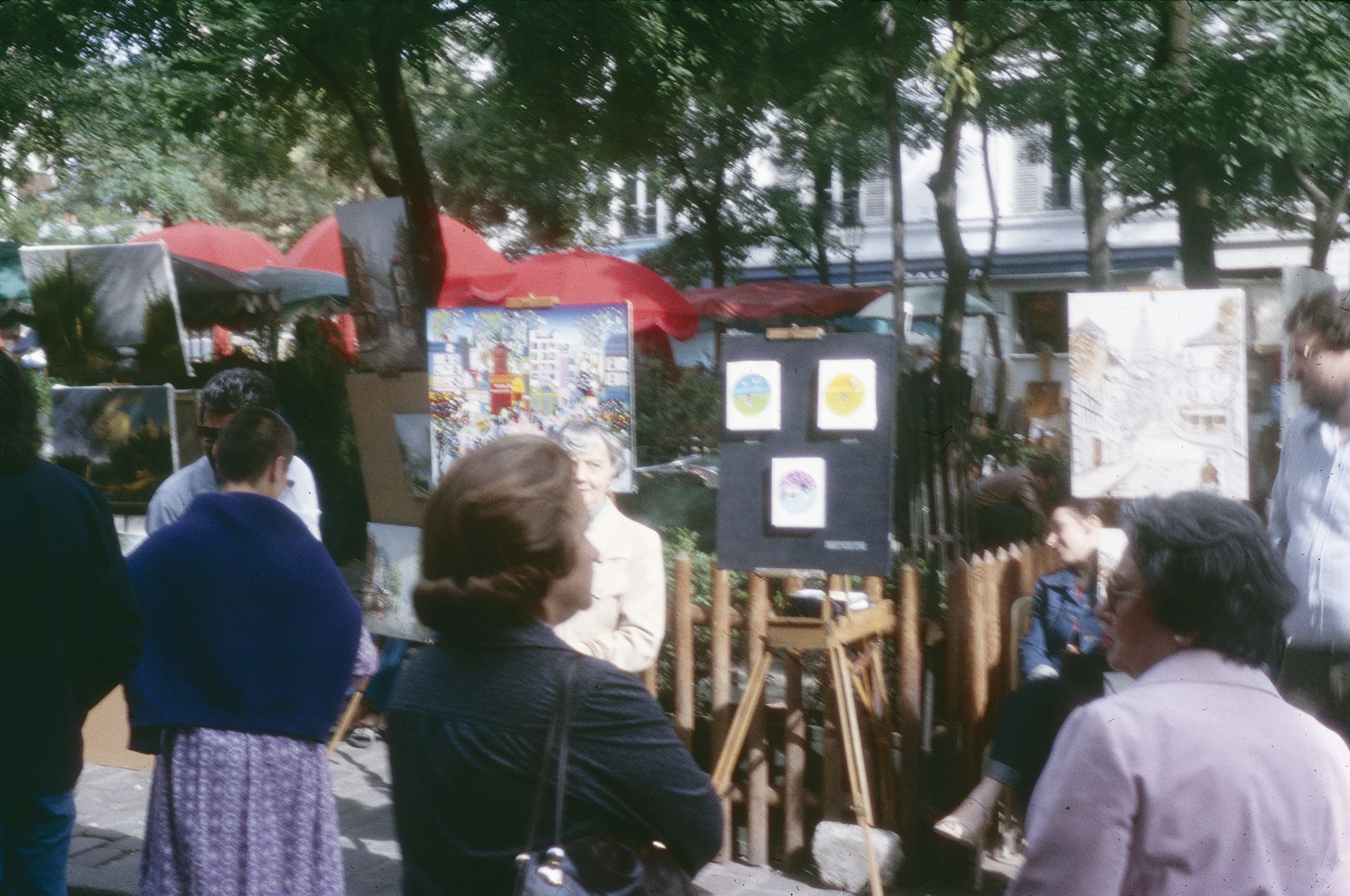
When Mireille left, Pierre took us to the Musée de Cire, the wax museum dedicated to Montmartre’s history. The wax figures were frozen in time — poets, painters, and revolutionaries — a reminder that this corner of Paris had always been a home for dreamers.
That first night, as we finally returned to the flat, we felt something quietly wonderful. We weren’t just visitors anymore. For a few fleeting days, Paris had opened its doors to us.
Exploring Paris – Food, Sights, and Surprises
The next morning, Paris beckoned again. We set out early, eager to see everything we could. Our plan was to visit the Champs-Élysées, one of those names you hear all your life but can’t truly imagine until you’re standing there.
Clare was delighted the moment we stepped out of the metro — the Arc de Triomphe stood directly before us, grand and proud, a monument to France’s history and resilience. We walked beneath it, stopping to read the names engraved into the stone, and then paused at the Tomb of the Unknown Soldier. Clare took it in quietly — the eternal flame, the flowers laid with care, the sense of reverence that hung in the air.
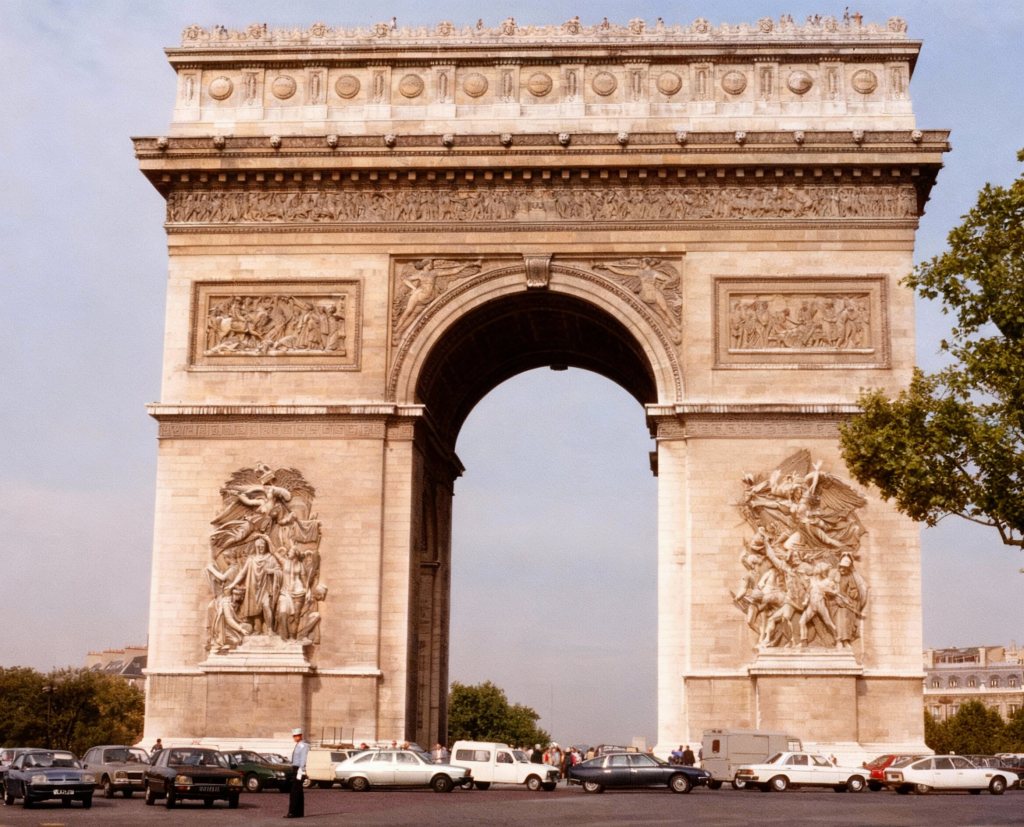
We decided to take the elevator to the top, and from there, Paris stretched endlessly in every direction. Twelve tree-lined avenues radiated outward, elegant and orderly, a perfect symbol of the city’s rhythm. Clare couldn’t help but marvel at the density — the rooftops packed close together, the little cars darting through narrow streets like clockwork toys. “How do they all fit?” she laughed.
From the Arc, we wandered down the Champs-Élysées, surrounded by the hum of the city — shops, cafés, banks, and theatres lining both sides. The familiar smell of roasted chestnuts mingled with the sweetness of patisseries. American films were playing at the cinemas — The Empire Strikes Back, Bronco Billy, Fame — a small reminder of home. We even passed a McDonald’s and a Burger King, but neither of us was tempted. We were in France, after all, and determined to savor every bit of its cuisine.
As we continued walking, landmarks unfolded one by one like scenes from a dream. We passed Parc Franklin D. Roosevelt, admired the Marly Horses near the Louvre, and stood before the Obelisk at Place de la Concorde, imagining the history that had unfolded there when the guillotine once stood. Paris carried its past so openly — beautiful and sobering all at once.
We rested at the Jardin des Tuileries, sitting among locals enjoying their lunch breaks. The gardens were peaceful, a contrast to the bustle of the streets. After a while, we strolled along Rue Saint-Honoré, peeking into shop windows filled with fashion and perfume. Then, at Place Vendôme, I paused to take a photo of the Ministry of Justice — France’s own version of our Department of Justice back home.
By the time we made our way back toward Pigalle, our legs had earned their rest. The neighborhood was lively — a jumble of cafés, music, and a slightly cheeky energy. It was easy to see why American GIs had nicknamed it “Pig Alley.” On the way back to the apartment, we stopped at a few small shops to buy the essentials: cheese, fruit, beer, and a variety of croissants — some plain, some stuffed with meat and pastry. Clare couldn’t help but notice how much bread Parisians ate, and yet how few seemed overweight. “It must be all this walking,” she said, half out of breath but still smiling.
That evening, Pierre joined us for dinner, and we were treated to a culinary surprise. He brought out a whole roast chicken — head and all — fresh from the farm, no doubt. When he began carving it, he held the head delicately in one hand, eating the neck meat with great enthusiasm. Clare’s eyes widened, and I tried not to laugh. It was a moment both unexpected and unforgettable — one of those small travel stories that still makes us grin decades later.
Cultural Moments – The Chicken, the Louvre, and Everyday Paris
By Friday, our plan had been to visit the Eiffel Tower — the kind of must-see landmark every traveler feels compelled to check off. But as often happens on trips like these, plans changed. Pierre discovered he needed to leave for school sooner than expected, which meant we had to rethink how we’d travel on to Grenoble and the Loire Valley.
It was a small disappointment, but mostly we felt sad to see Pierre go. Over just a few days, he’d become more than a relative — he felt like an old friend. We sat with him one last evening, sharing a quiet meal and a few good laughs. When it came time to say goodbye, there was that familiar ache of parting from someone you’ve just grown close to.
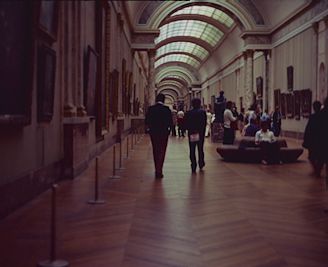
So, instead of the Eiffel Tower, we decided to spend the day at the Louvre — a choice that, in hindsight, felt perfect. Clare had a special fondness for the Impressionists, so that’s where we started. We wandered through galleries filled with the works of Monet, Van Gogh, Manet, Sisley, Pissarro, and Gauguin, soaking in the light and color that seemed to dance off each canvas. Clare stood quietly in front of several paintings, her expression a mix of awe and joy. It was her first time seeing so many of these masterpieces in person, and I could tell it was something she’d remember forever.
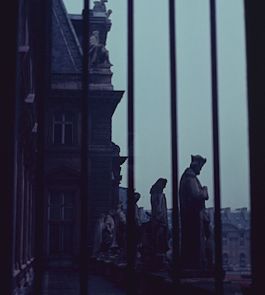
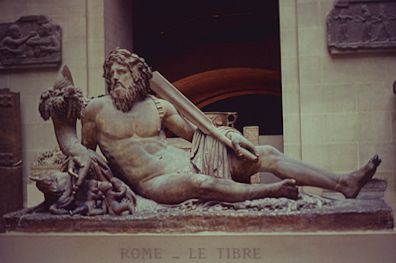

At noon, we left the museum in search of the restaurant Cecile had recommended, tucked near the Bibliothèque Nationale. We found it, small and welcoming, the kind of place where the tables are close and the air hums with conversation. The meal was simple and delicious — exactly what we needed after a morning on our feet.
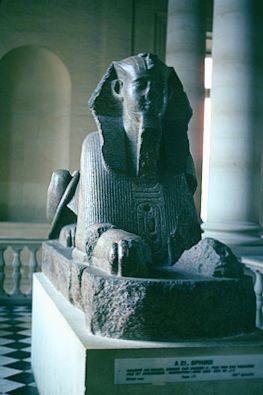
Recharged, we returned to the Louvre to explore the Egyptian Gallery. I’d never seen it before myself, and it turned out to be a highlight. The scale of the artefacts — statues, mummies, ancient carvings — was awe-inspiring. There was a stillness to that part of the museum that felt almost sacred.
By the time we left later that afternoon, we were tired but deeply content. The day had been slower, quieter, and it gave us time to simply be in Paris — no rush, no checklist, just the joy of discovery together.
That evening, the phone rang. It was Mireille, calling to give us directions to Mantes-la-Jolie, where we’d meet the Capieux family the next day. Clare brightened immediately — she’d been so touched by Mireille’s kindness and was eager to see her again. I couldn’t help but feel the same. The next chapter of our journey was waiting, and if Paris had been about beauty and wonder, Mantes-la-Jolie would remind us of warmth and family.
Mantes-la-Jolie – Family, Gardens, and Heartfelt Goodbyes
The next morning, we rose early, ready to leave the bustle of Paris behind for a day. Armed once again with Cecile’s detailed notes, we made our way to Gare Saint-Lazare, bound for Mantes-la-Jolie, a small town about an hour outside the city.
Sometimes travel gifts you with unexpected kindness, and that morning was one of those moments. On the platform, we happened to meet a woman who was also travelling to Mantes-la-Jolie. She noticed our slightly uncertain expressions — no doubt betrayed by our American accents and the way we double-checked every sign — and kindly offered to make sure we got to the right stop. It’s funny how, when you’re far from home, even a stranger’s smile can feel like an anchor.
When we arrived, Mireille was waiting for us with her usual warmth, and with her were the Capieux family — Nanette and Maurice — who greeted us with wide smiles and the traditional French kisses on each cheek. For Clare, it was another first, and she handled it with good humor, laughing as she adjusted to the rhythm of French greetings.
Nanette drove us to their home, a small but beautiful house surrounded by a large garden bursting with life. There were fruit trees, rows of vegetables, and flowers in every corner, the kind of garden that clearly had been tended with love. It felt instantly peaceful — a place where time moved slower, where meals and conversations unfolded gently.
We began with an apéritif and a walk through the garden as Nanette proudly pointed out her trees and vegetables. Then came dinner — a true feast, though the dishes were simple and fresh. We started with a rice salad layered with tomatoes, eggs, tuna, and anchovies, followed by a tender turkey cooked with tomatoes and mushrooms. The cheeses came next — four different types, each one better than the last — and, finally, coffee served outside in the cool evening air.

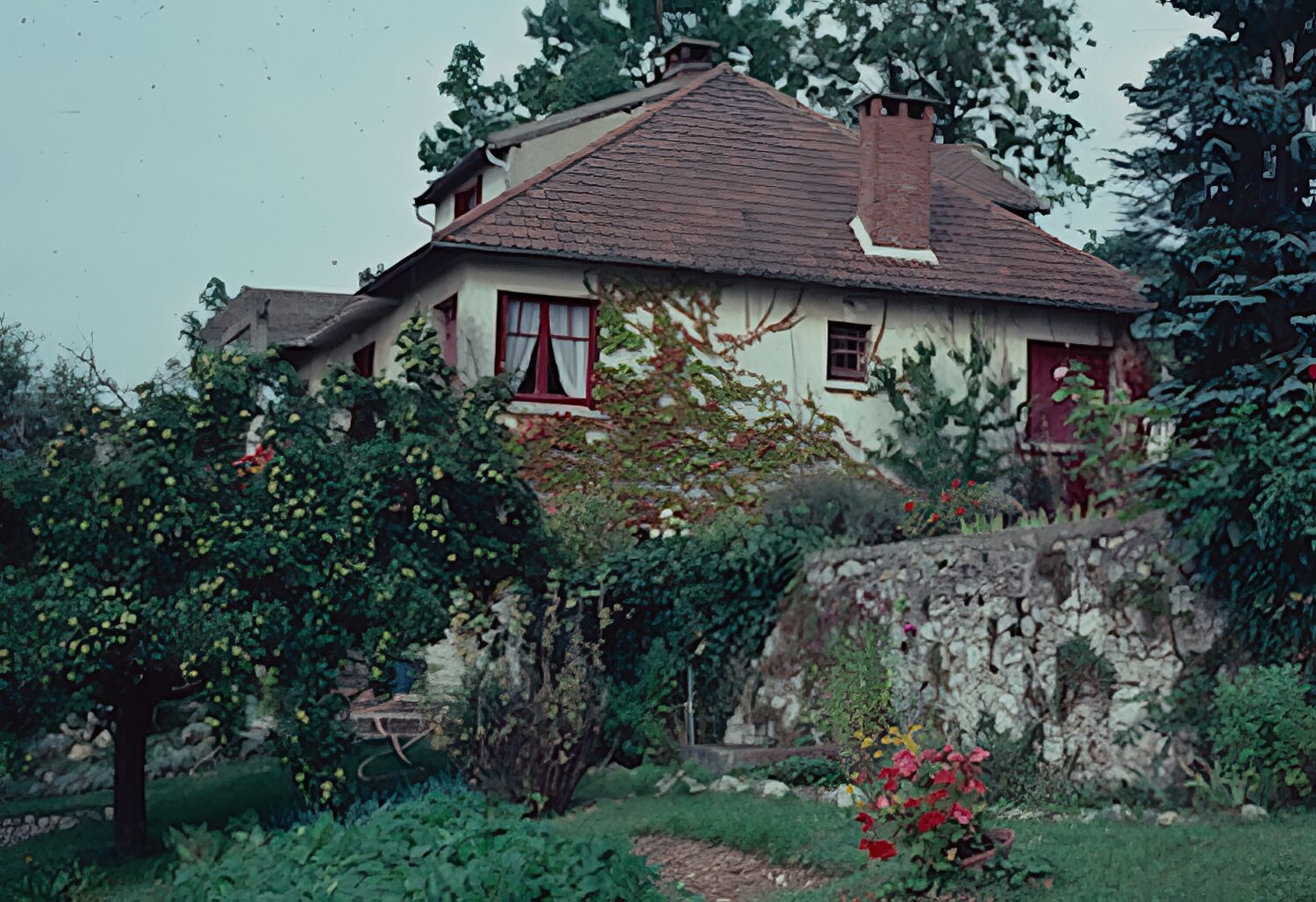

But what I remember most vividly, even now, were the cherries. They looked innocent enough — glossy, red, and inviting — but they had been soaked in alcohol. I popped one into my mouth and felt, quite literally, a small explosion. The burst of flavor, the rush of warmth — it was as though the cherry had a secret life of its own. I laughed out loud, startled, and everyone at the table joined in. Even today, that moment remains as sharp in my memory as any landmark we saw.
The afternoon slipped by easily. We talked about family, about life in America and France, about the garden. There was a quiet joy in being there — two cultures meeting over good food and shared laughter.
When it was time to leave, Nanette insisted we take some of her produce — lettuce, tomatoes, carrots, and prunes from her garden — as a parting gift. At the train station, as we said our goodbyes, Nanette’s eyes welled with tears. It was such a small thing — a farewell after only a day together — but it spoke volumes about her kindness and the bond that had already formed.
As the train pulled away, I remember Clare sitting quietly beside me, holding the bag of vegetables in her lap, a soft smile on her face. “They’re wonderful people,” she said. And she was right. That day, more than anything, reminded us that family isn’t just about blood — it’s about generosity, laughter, and the feeling of being welcomed, even when you’re far from home.
Paris Days – Versailles, Flea Markets, Towers, Riverboats, and Everyday Life
Sunday arrived quietly, and with it a simple plan: pack a small backpack with food and take the train out to Versailles. The metro ride and short train journey took about half an hour, and when we stepped off, a large map greeted us with a tidy route to the palace. We followed it along bustling streets until a lively market caught our attention — baskets, mesh sacks, vendors calling out prices, and tables piled high with fruit and vegetables. We stopped to buy a bit of cheese for lunch, already imagining the picnic we’d have on the palace grounds.
The line into Versailles was long and filled with visitors from every corner of the world. Japanese tourists made up the largest group, followed by British and German travelers, though we noticed very few Americans. The outside of the palace felt large but restrained compared to what waited inside — parquet floors, deep red everywhere, gilding in every room, chandeliers in places that didn’t seem large enough to justify them. The Hall of Mirrors was as grand as expected, but the crowds swept us along so quickly that it was hard to enjoy.


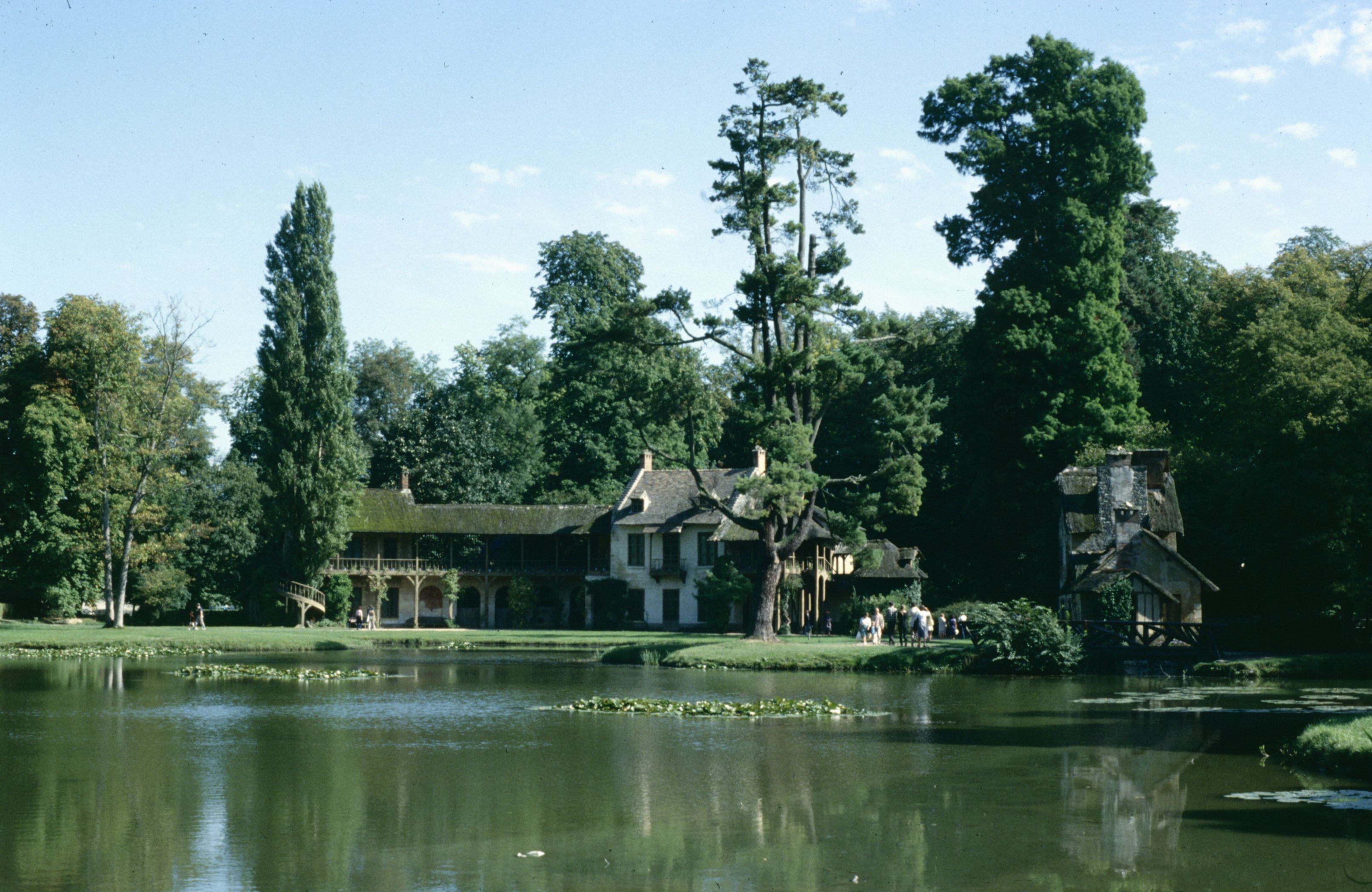

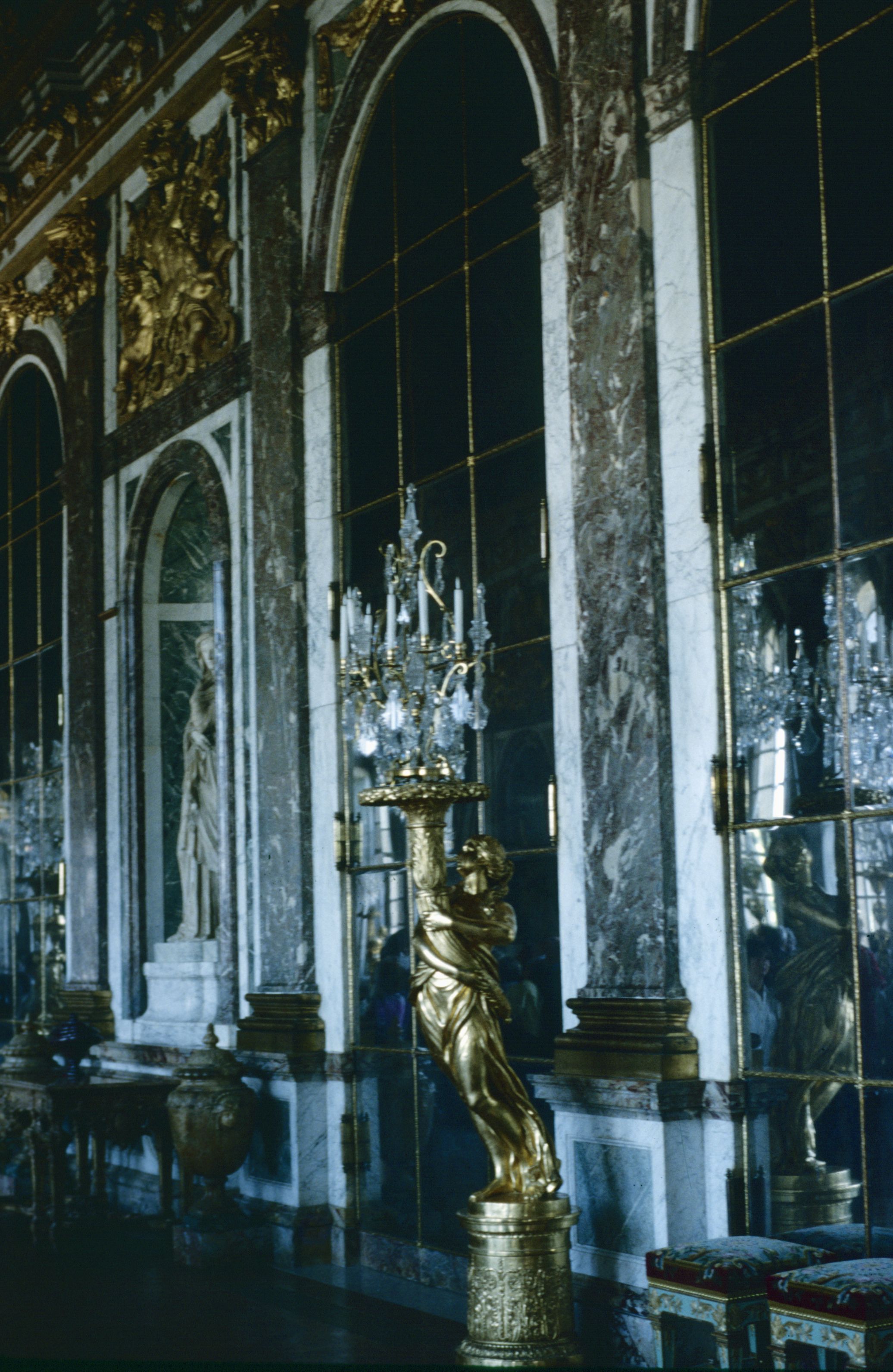
Once outdoors again, we found a quiet place for lunch before wandering into the vast gardens. With each step away from the crowds, the grounds became more peaceful, stretching out endlessly in neat lines and geometric beauty. I took photos as we walked, hoping the camera could capture even a fraction of the scale and elegance. We returned to the apartment late in the afternoon and ended the day with a simple, perfect dinner: salad, bread, cheese, fruit, and wine.
That evening offered a full moon and ideal weather — too lovely not to stroll back to Sacré-Cœur. Clare stood on the steps listening to local musicians while I wandered around taking photos. A young man approached Clare and began speaking, but she couldn’t understand him at first. When he switched to basic questions — “Where are you from?” and “Are you here with friends?” — she still wasn’t quite sure if he was being friendly or trying to pick her up. Paris can keep you guessing like that.
Rain, Notre-Dame, and a Personal Triumph
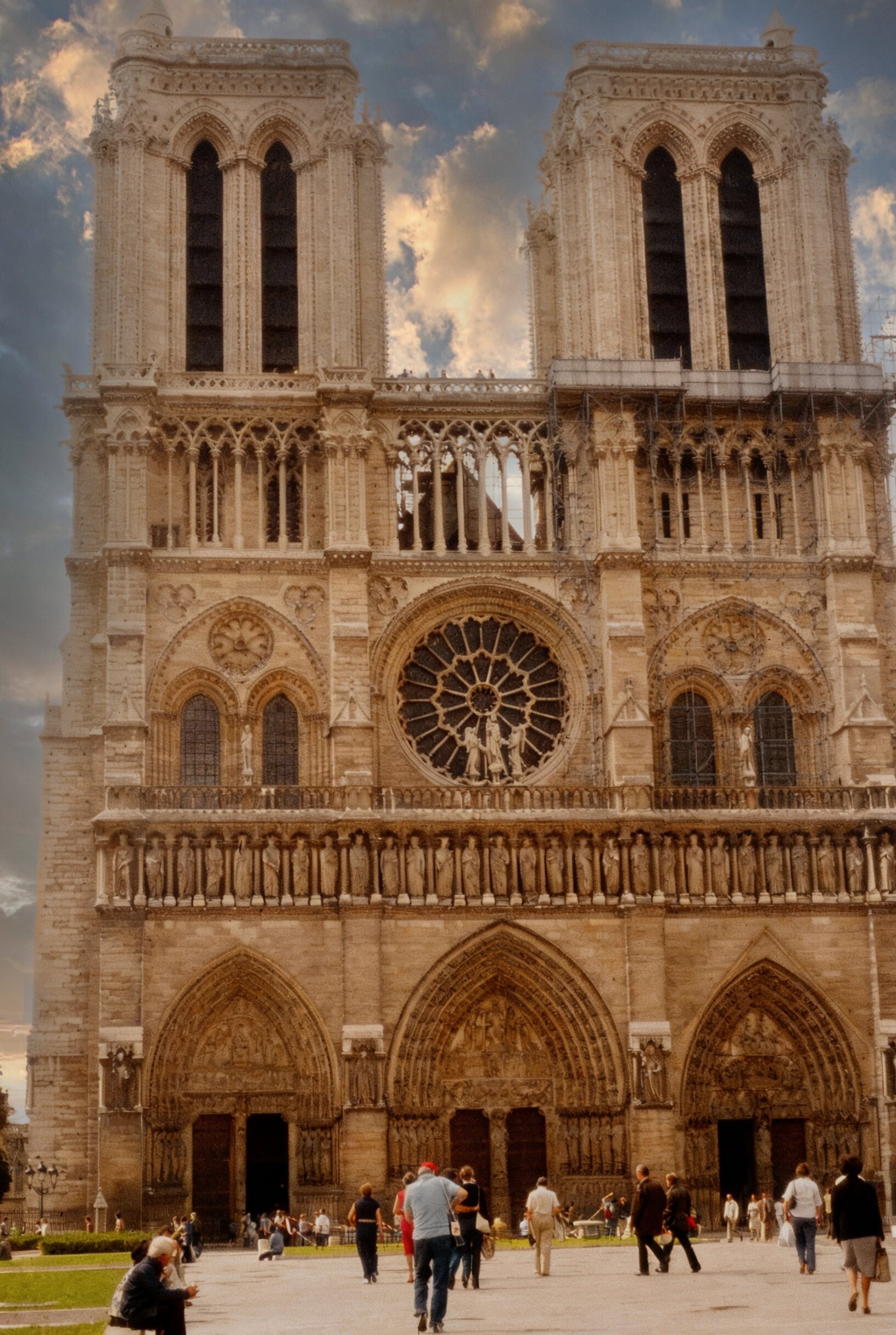
Monday arrived grey and rainy, but we stuck to our plan to visit the Marché aux Puces — the flea market. Some vendors were still setting up when we arrived, but the stalls soon filled with everything imaginable: clothes, shoes, jewelry, souvenirs, furniture, and a fair amount of odds and ends. After a bit of exploring, the rain drove us toward Notre-Dame, promising shelter and a chance to see one of Paris’s treasures.
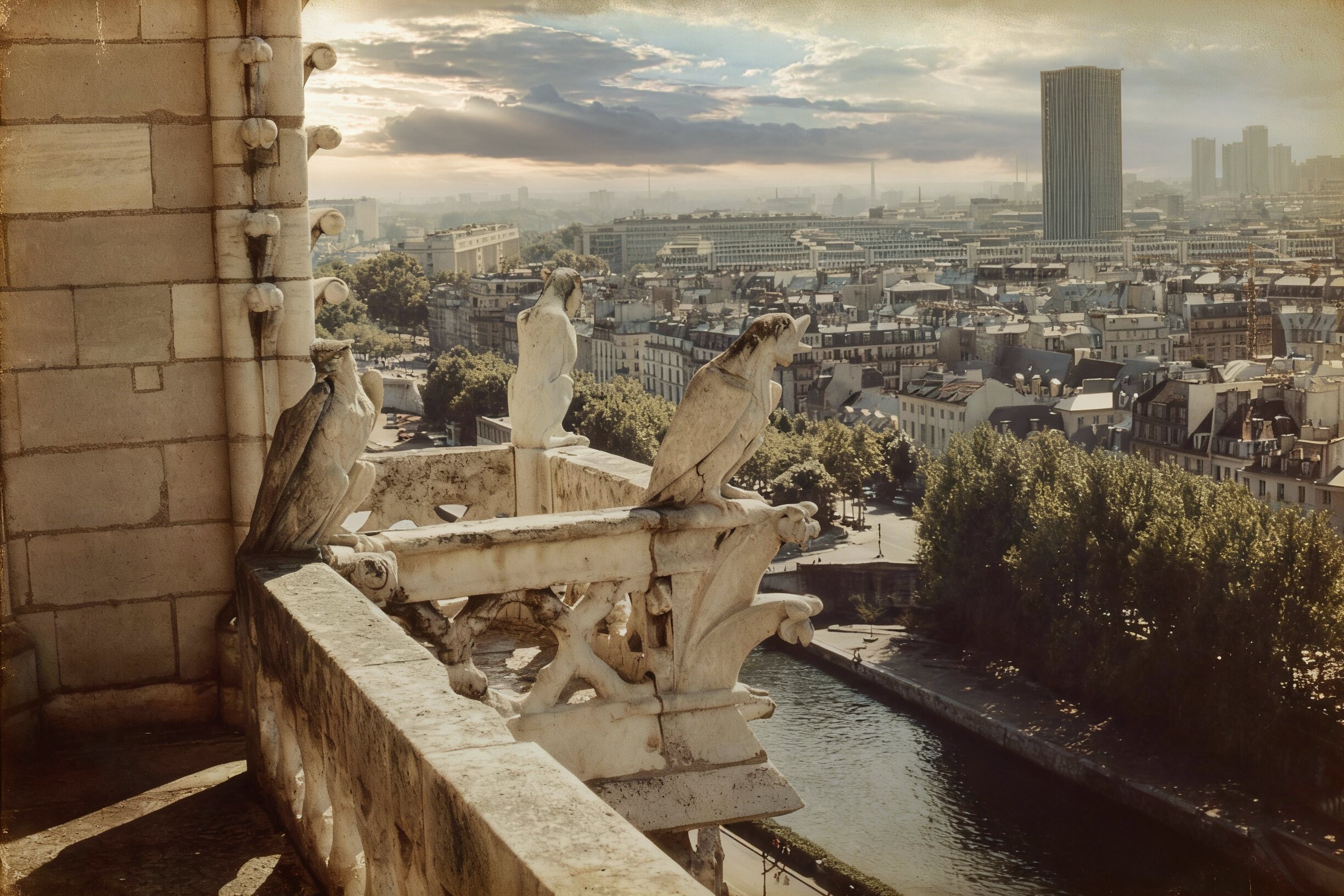
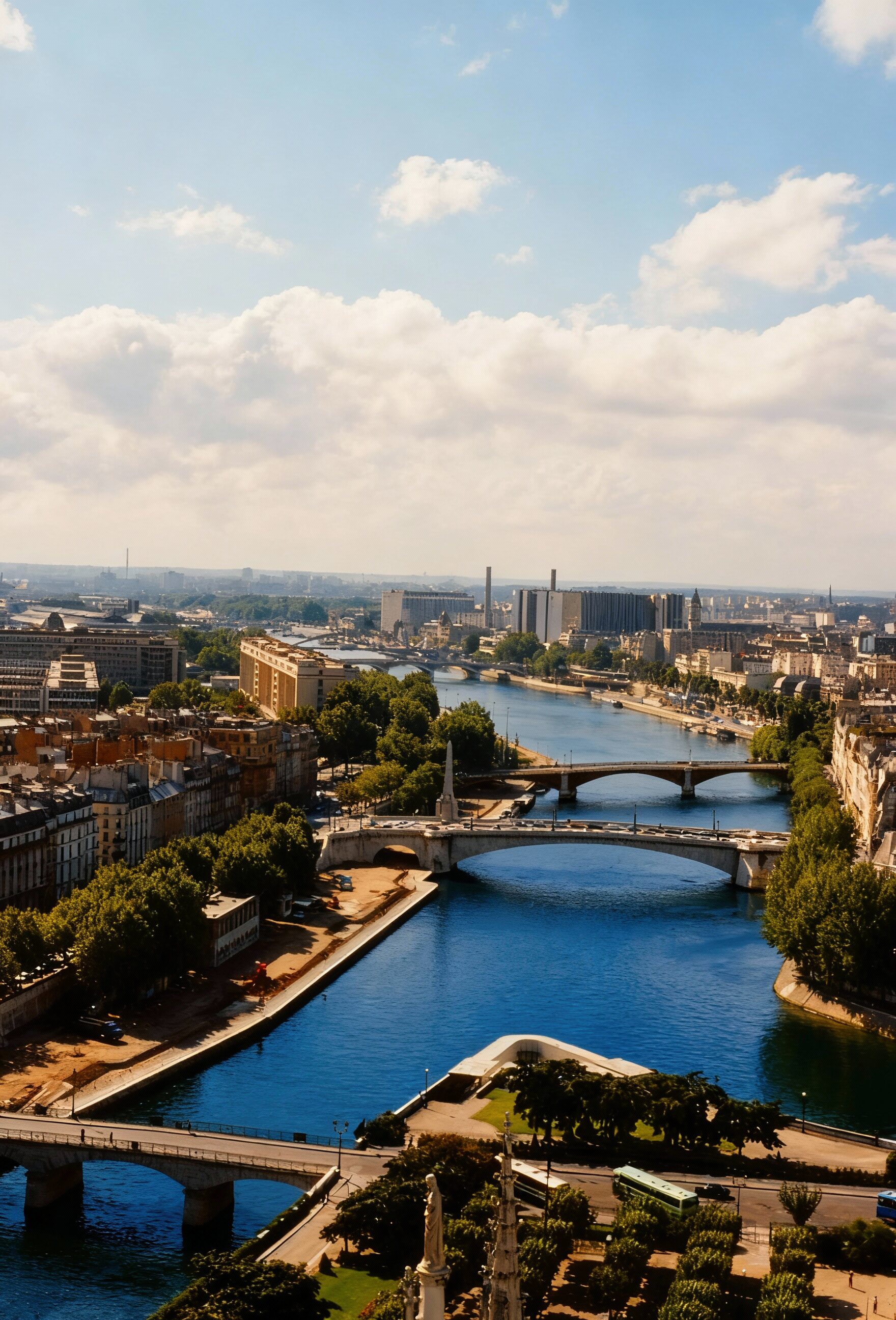
Inside, Clare was mesmerized by the stained-glass windows — towering, intricate, glowing softly even in the dim light of the storm. We decided to climb the towers, and the narrow, worn steps wound upward in a tight spiral that seemed endless. When we reached the first level, the view was magnificent, but it came with a challenge of its own — a small walkway, a low wall, and then open air. My acrophobia surfaced instantly.
Still, I decided to push myself and climb the remaining stairs to the top. It was only about fifty steps, but it felt like hundreds. At the summit, I edged along carefully, unable to get too close to the outer wall without feeling ill. When I finally made my way back down, the relief was overwhelming. When I met Clare at the mid-level, I was pale and shaky, but also exhilarated. She made me sit for a while, convinced I might faint. I’d faced a fear — even if only briefly — and come out the other side.

Afterward, we wandered over to the Law Courts and found ourselves among lawyers in formal black robes with white collars. We then visited Sainte-Chapelle, where the first floor was bright and almost garish, but the second-floor windows — the oldest stained glass in Paris — were breathtaking. Light poured through them in every color imaginable.
Later, near Pont Neuf, we booked a riverboat tour on the Seine. The commentary switched between French, English, and German, though the details were more focused on the bridges than the buildings. Still, it was lovely to see the city from the water: barges covered in flowers, sunbathers on the banks whenever the clouds parted, and the inevitable scattering of beggars we’d grown used to seeing in parks and on the metro.
The Eiffel Tower and the Haze Above Paris
Tuesday brought sunshine, though a constant haze hung over the city — pollution from the endless stream of cars. Our destination that day was the Eiffel Tower. We approached from the Palais de Chaillot, crossed the Pont d’Iéna, and suddenly there it was: taller, wider, and more imposing than any photo could capture.


After the ordeal at Notre-Dame, we approached this climb with caution. We opted for the 1st stage only, taking the angled lift upward. The platform felt safer — wide walkways, railings, and plenty of space. We took our time, enjoying the sweeping views without the vertigo.
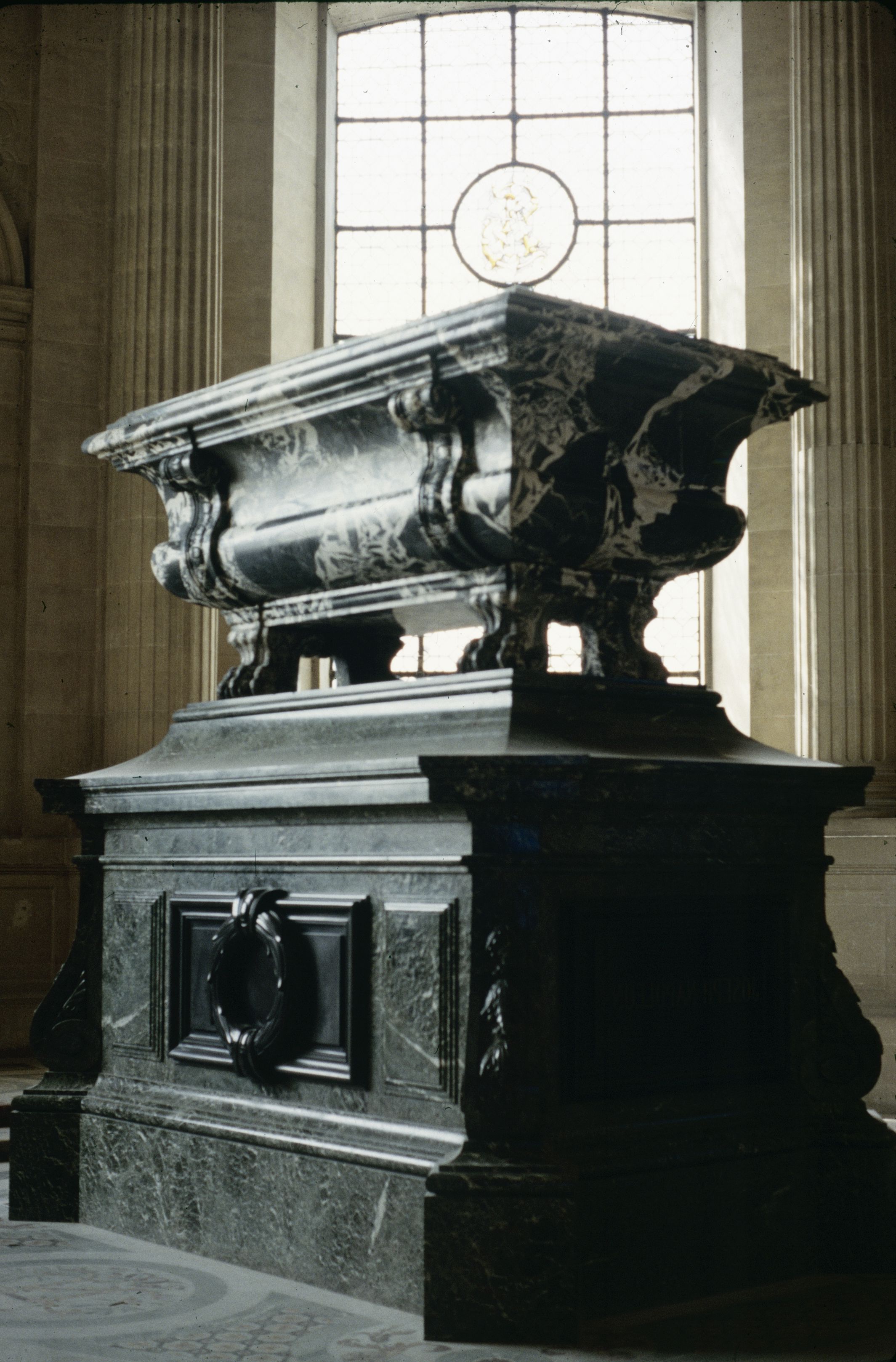
Back on solid ground, we walked past the École Militaire and continued to Les Invalides, where we visited the Dome Church and saw Napoleon’s tomb, resting in its grand, solemn chamber.

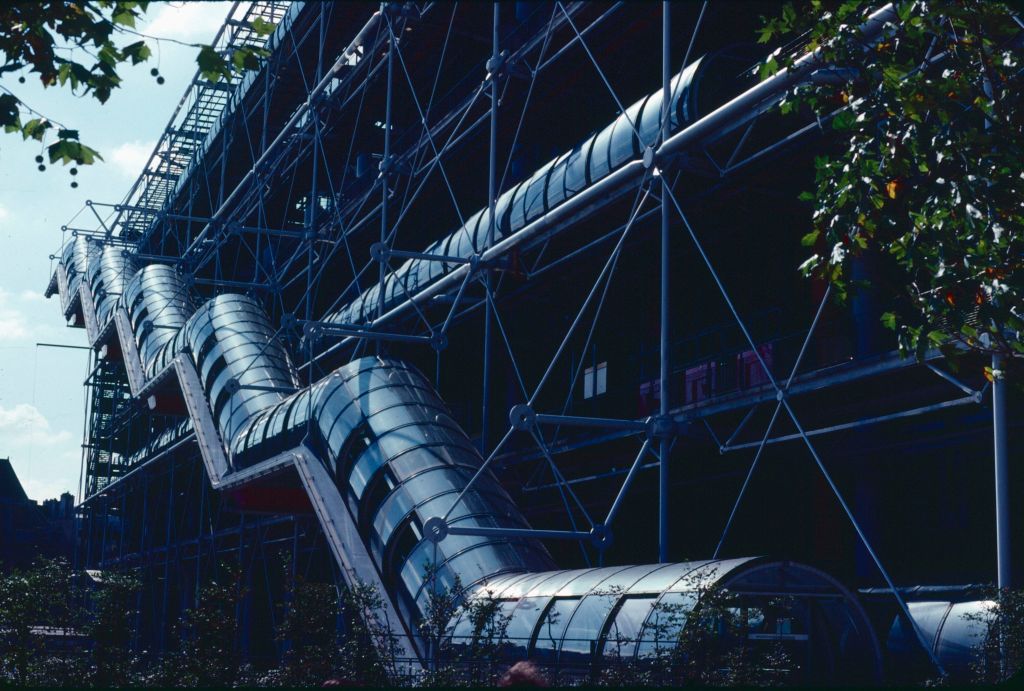
Later, hunger led us to Montparnasse, where we tried a typical French quick lunch: steak and frites. Not the best meal of the trip, but it filled the gap. Afterward, we made our way to Beaubourg, the area surrounding the Centre Pompidou. Clare wasn’t impressed — she thought it a shame that Les Halles had been replaced by such an unattractive building in a city known for beauty. The surrounding streets were a jumble of arts-and-crafts shops, sex shops with rather confronting window displays, and advertisements far more revealing than anything you’d see in the United States. It was cultural shock at its finest.

Crystal, Windmills, and One Last Walk Through Paris
On Thursday, our final day in the city, we visited Rue Paradis, home to Baccarat, Limoges, and other famed china and crystal shops. Inside Baccarat, Clare described the experience in one word: dazzling. Glass counters stretched endlessly, each filled with crystal pieces that sparkled under bright lights. We chose the styles of wine and water glasses we liked so Cecile and my relatives could purchase pieces for us later as gifts for Christmas or special occasions.

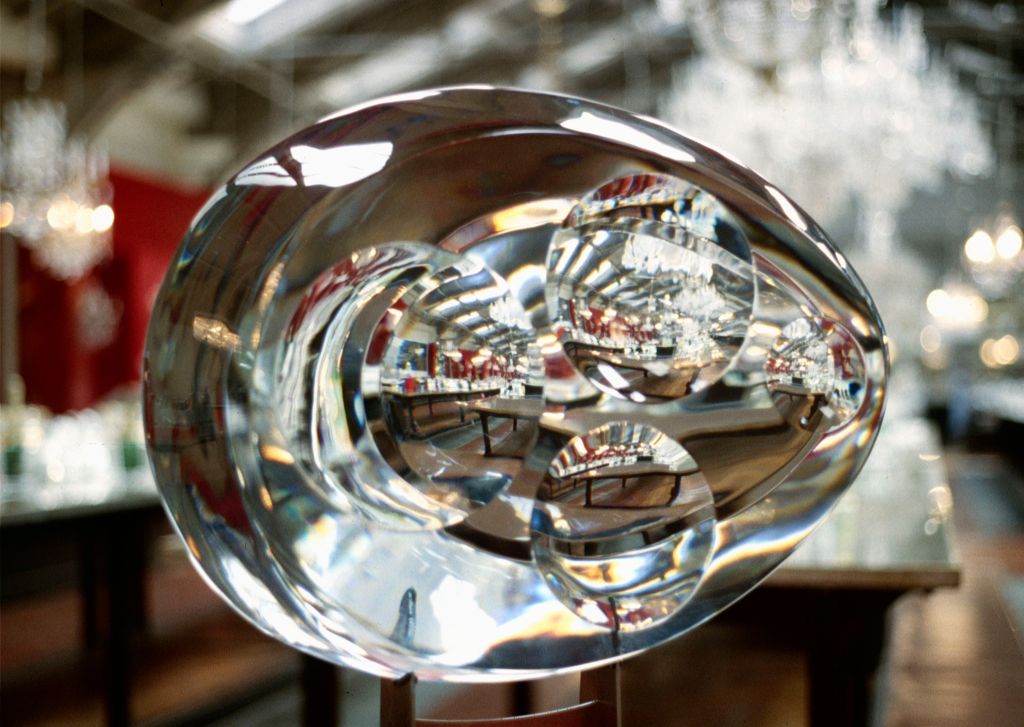
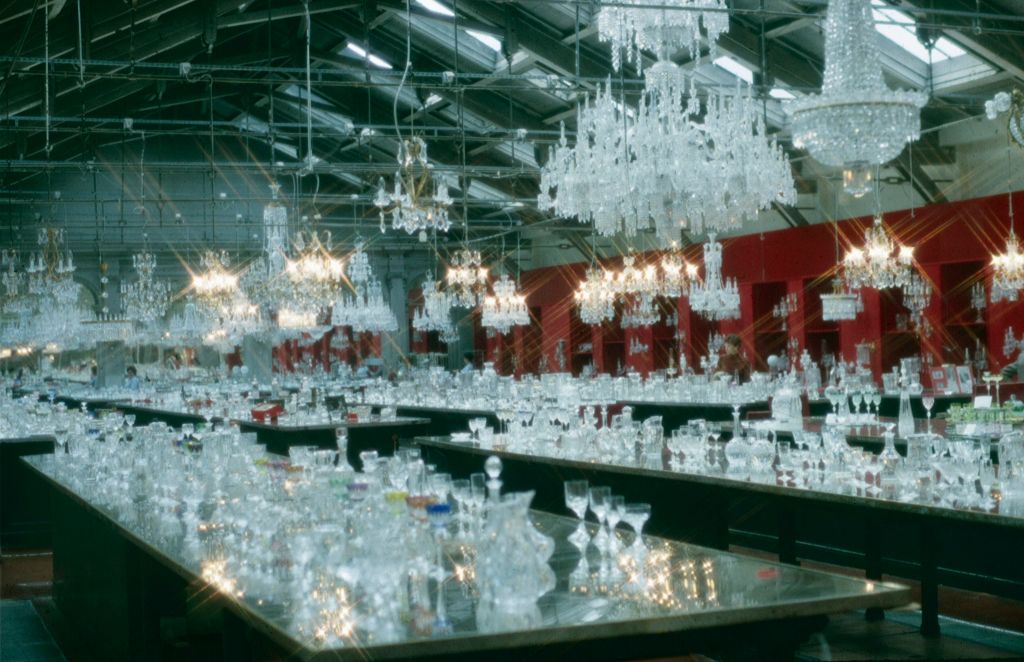
Walking down Rue Paradis afterward, we admired the displays — though everything was well beyond our budget. Eventually, we made our way back toward Montmartre, stopping to admire the iconic red windmill of the Moulin Rouge.
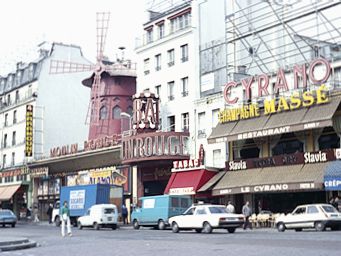
That evening, our last in Paris, felt bittersweet. We didn’t know when we might return, and although we were excited for the countryside, Paris had left its mark on us — with its beauty, quirks, surprises, and quiet moments of connection.
Clare had a few final observations before we left:
- Many women dyed their hair red.
- Few men had facial hair.
- There were more beggars — and more bad musicians — than expected.
- Everything cost money, including toilets.
- Cameras required extra fees in almost every attraction.
- And condiments? You paid extra for ketchup and mayonnaise.
They were the kinds of little truths you never read in guidebooks, but remember long after the trip ends.
Chartres: A Gothic Masterpiece and an Unexpected Reunion
The morning we left Paris felt strangely quiet. We’d grown used to the hum of Montmartre — the clatter of footsteps on the steps of Sacré-Coeur, the chatter from cafés, even the questionable musicians who always seemed to be performing somewhere nearby. But it was time to move on. So we cleaned the apartment, packed our bags, and boarded the Metro one last time, heading for Gare Montparnasse.
The train to Chartres took only about an hour, but the change in scenery felt dramatic. Paris faded behind us, replaced by rolling fields and small towns that seemed to slow the rhythm of the day. When we arrived, we grabbed a simple salad for lunch, knowing we’d need our energy. The cathedral was waiting.
Notre-Dame de Chartres is one of those places that defies words. Even from the outside, the towers rise like something out of another world. But stepping inside is what truly strikes you — the sheer scale, the cool air, and the stained-glass windows that glow like jewelry held up to the sun. Clare walked slowly, taking it all in. The windows are famous for a reason; they make you feel as if the light itself has color and meaning.
Chartres is also one of the best-preserved examples of Gothic art. The monumental statuary, the medieval carvings, the painted details that somehow survived centuries — it felt like walking through history rather than simply observing it. We took our time, knowing this wasn’t a place you rushed.


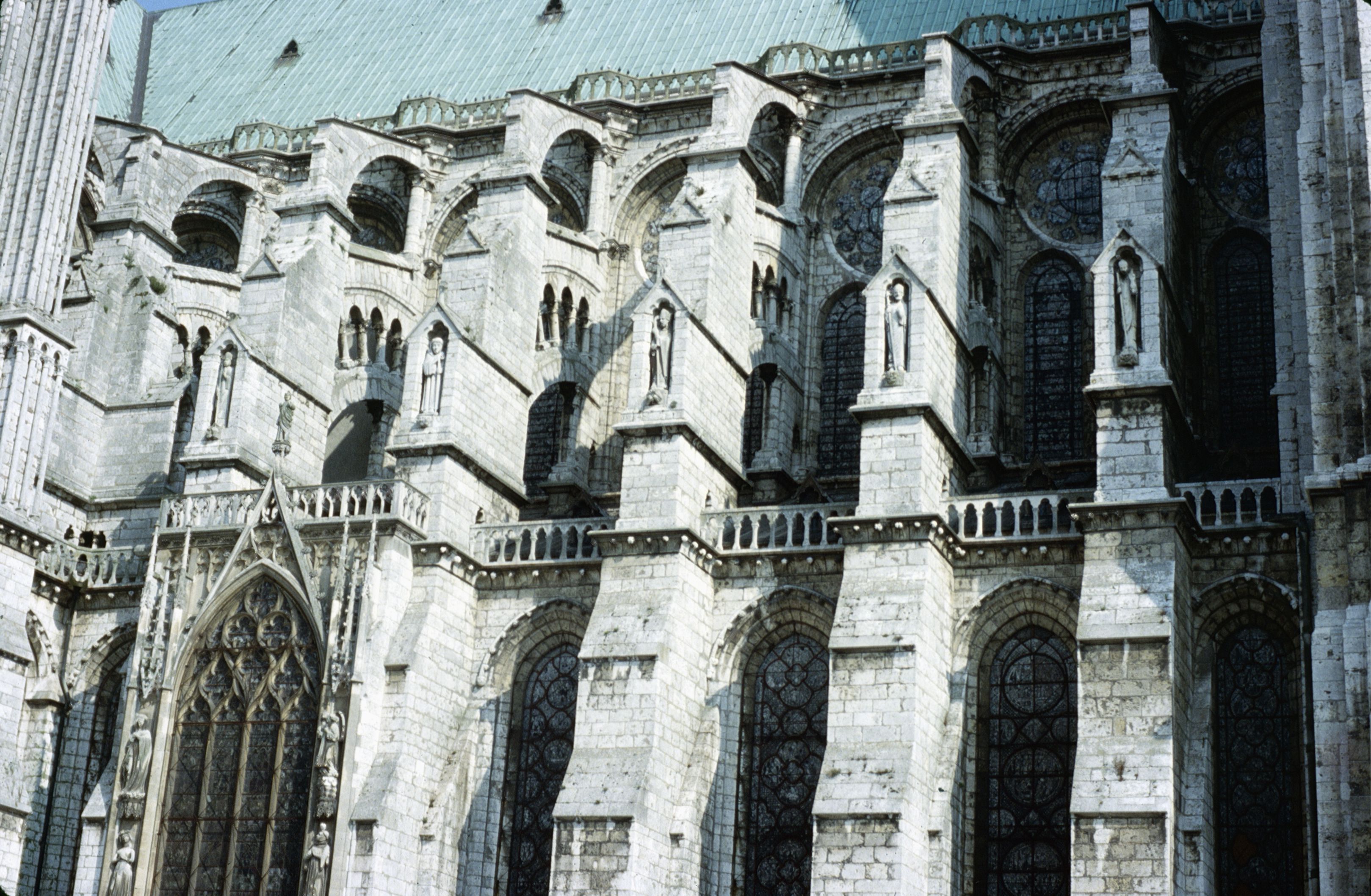
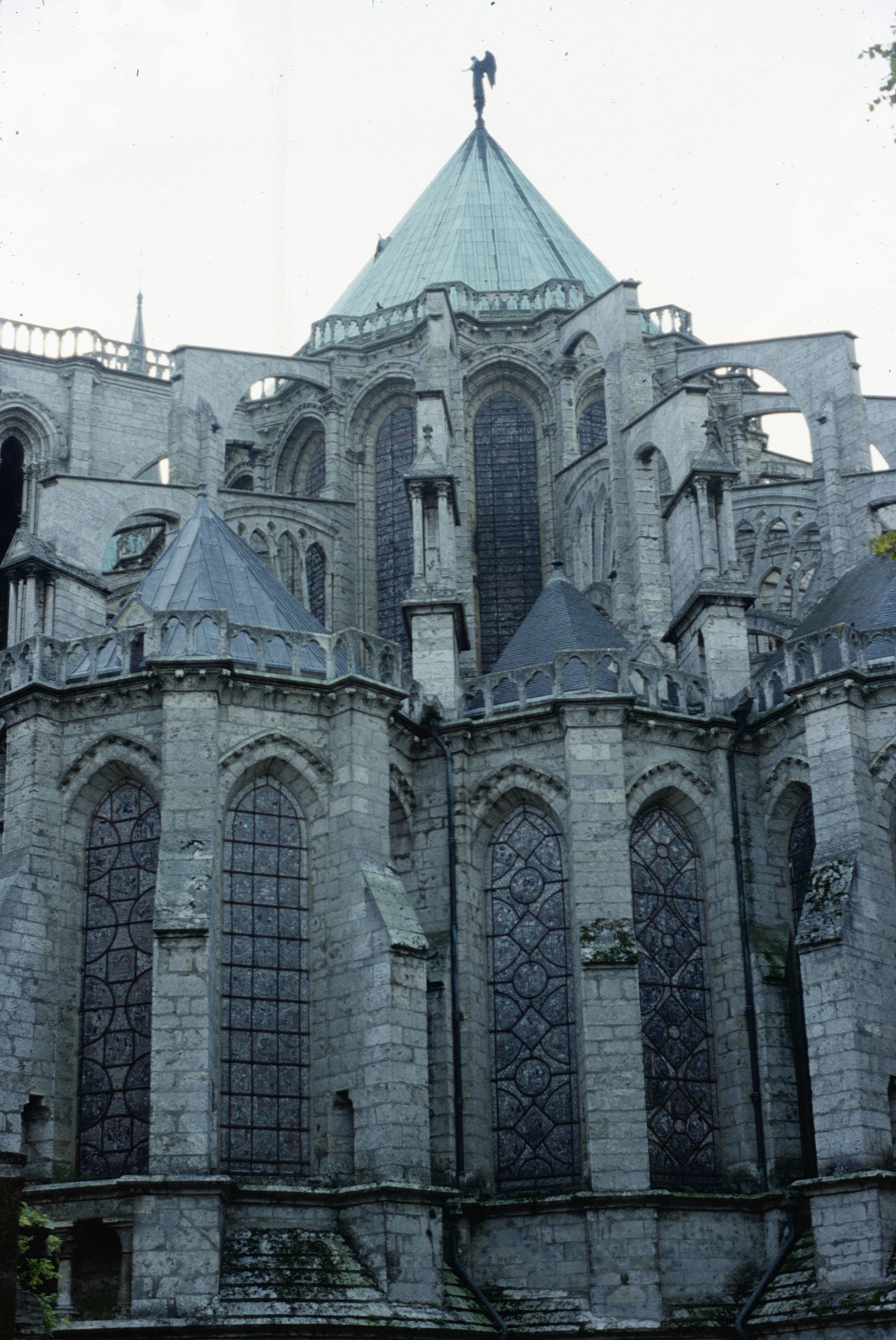
When we finally stepped back outside, we positioned ourselves by the front doors to wait for Pierre’s parents, Valentin and Marie Rose. As we stood there, a woman approached Marc and asked in French-accented English, “Are you American? Is your name Marc?” When he said yes, she smiled warmly, introduced herself as Mary Rose, and kissed us both on the cheeks. Somehow, even after a week in France, the cheek-kissing still felt new to Clare.
Mary Rose led us to the car where Valentin was waiting, along with a distant cousin, Madeleine. Without much ceremony — and very much in the French style — they launched into the plan: a drive through Normandy, a visit to Mont-Saint-Michel, then a tour of the châteaux in the Loire Valley before eventually heading to Prissé. It was the sort of itinerary that promised beauty, food, history, and probably a bit of chaos. In other words, exactly what travel is meant to be.
And just like that, we were off again — leaving Chartres behind as gently rolling farmland appeared outside the car windows. It was clear that this next leg of our journey would be different: more rural, more intimate, and filled with family we barely knew but were already being welcomed by with open arms.
Normandy Countryside and Mont-Saint-Michel Emerging from the Fog
The drive through Normandy was the kind of landscape you instinctively slow down for — even if the driver doesn’t. Fields rolled out in every direction, dotted with cows and stone farmhouses that looked like they’d been standing there for centuries. Every village we passed through had its own quiet charm: white or tan stone houses, red and yellow flowers spilling from window boxes, and narrow lanes that forced the car to slow, if only for a moment.
By evening, we stopped at a small country restaurant for dinner. Clare took one bite and declared that country food was even better than city food — a statement she would repeat several times over the next few days. The meal felt endless in the best way: baskets of bread, salad with tomatoes, rillettes, cold chicken, lamb chops, ham and eggs, potatoes, peas and carrots, and finally cheese or cake. And wine, always wine, poured as freely as water. All of it for 27 francs, which surprised us both.
The next morning, we stepped outside around eight and found the world wrapped in thick fog — the kind that softens everything and makes distance hard to judge. We returned to the restaurant for a simple breakfast of coffee and croissants. The milk and butter were unbelievably fresh; the kind of country produce that ruined you for the supermarket versions forever.
We drove through the fog for what felt like ages before finally approaching Mont-Saint-Michel. At first, we could barely make out a shape through the mist. Then, little by little, it began to appear — the outline of the abbey rising above the tidal flats, almost like a mirage. It’s one thing to see it in pictures; it’s another to watch it slowly materialize in front of you, as if the fog itself were presenting it.
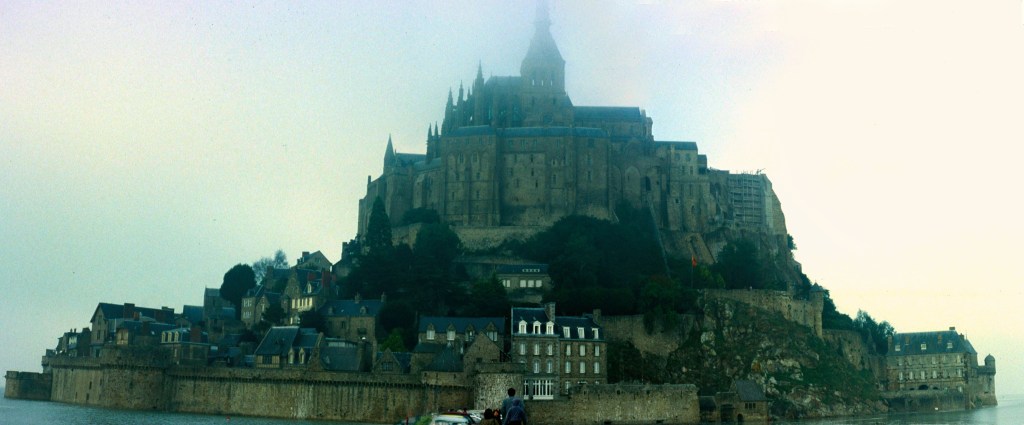
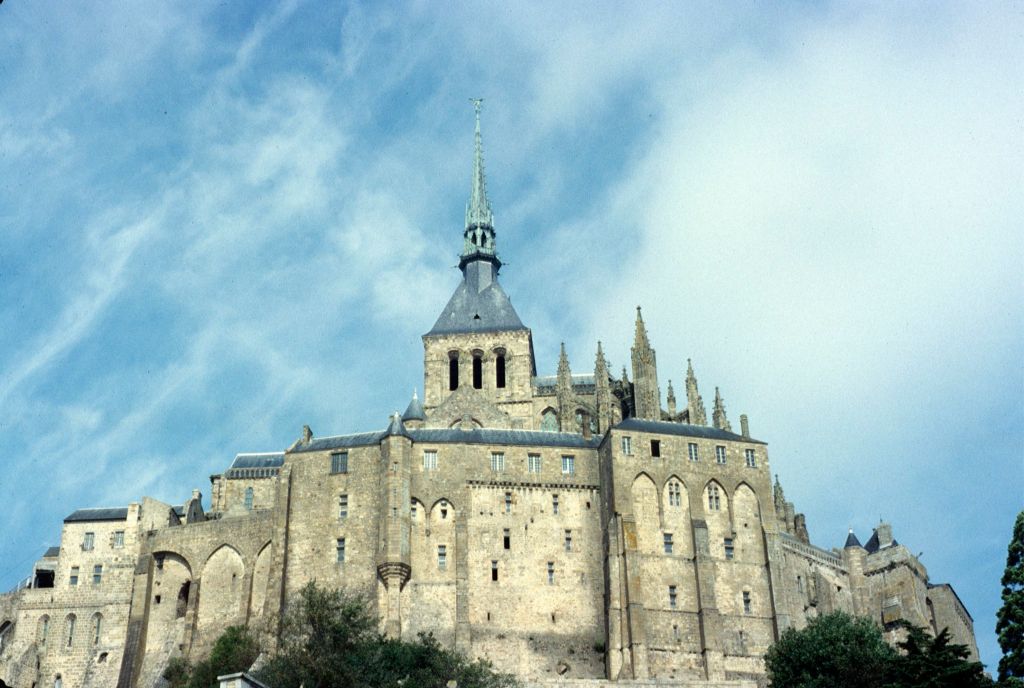
As we crossed the strip of land that connects the mainland to the island, we could finally see the battlements, the small town at its base, and the steep climb to the church at the top. Inside, the architecture shifted from Roman influence to elements added by later builders. It felt like walking through layers of history — each stone telling part of the island’s long story.
By noon, hunger set in, and we left to find a seafood restaurant. It took a while, but the Girards were determined. And their determination paid off: Clare tried mussels for the first time and loved them; Marc tried snails soaked in butter and garlic and enjoyed them just as much. It felt like a small rite of passage — tasting the sea after a morning wrapped in fog.
After lunch, we began the drive toward the Loire Valley, with Mary Rose phoning ahead to secure a reservation in a small town. The countryside slid past the windows, and we felt ourselves entering a different part of France — a place where castles, vineyards, and long lunches were just part of the rhythm of daily life.
Another chapter of the trip was beginning, and so far, it felt rich with beauty, food, family, and a sense of discovery that made each day feel new.
Loire Valley Châteaux, Country Roads, and the Art of French Dining
The Loire Valley welcomed us with rolling vineyards, sleepy towns, and a sense that every road curved toward another castle. Each morning started the same way: climbing into the car, the map spread out, everyone pointing in different directions, and then setting off — often in the wrong direction. Getting lost became as much a part of the trip as the châteaux themselves.
Our first stop was Solesmes, where the Girards and Madeleine wanted to hear Gregorian chants. Though the service had already begun by the time we arrived, they bought a recording to bring home — a small consolation prize. Then we continued deeper into the valley, where castles seemed to appear out of nowhere. Some sat proudly above rivers, others were tucked behind long avenues of trees, and each one had its own character.
Clare began to suspect that the Girards had two goals:
- To show us as many châteaux as physically possible.
- To have us taste every wine in the Loire Valley.
Madeleine certainly played her part. She ordered two bottles of wine with every meal, which was far more than we needed but apparently just right in her eyes. If it hadn’t been for Clare’s daily lunchtime coffee, she would have fallen asleep in the car every afternoon.
There was a pattern to each day:
- Morning: search for a château (and usually get lost)
- Afternoon: search for a restaurant
- Later afternoon: search for a hotel
Each search came with its own adventures, wrong turns, and the occasional argument between the Girards, though always in good humor.
On the last night in the Loire Valley, we stayed in a 500-year-old hotel, and it looked every bit its age. The narrow stone staircase spiraled upward in a tight circle, dark and uneven. Clare climbed carefully, imagining how many centuries of feet had worn those steps down. Dinner, however, was worth the climb. At exactly 7:30pm, the Girards and Madeleine hurried down the stairs as if racing for a prize — dinner was never something they dawdled over. The meal was delicious, and this time we were prepared, having sensibly eaten only a small lunch.
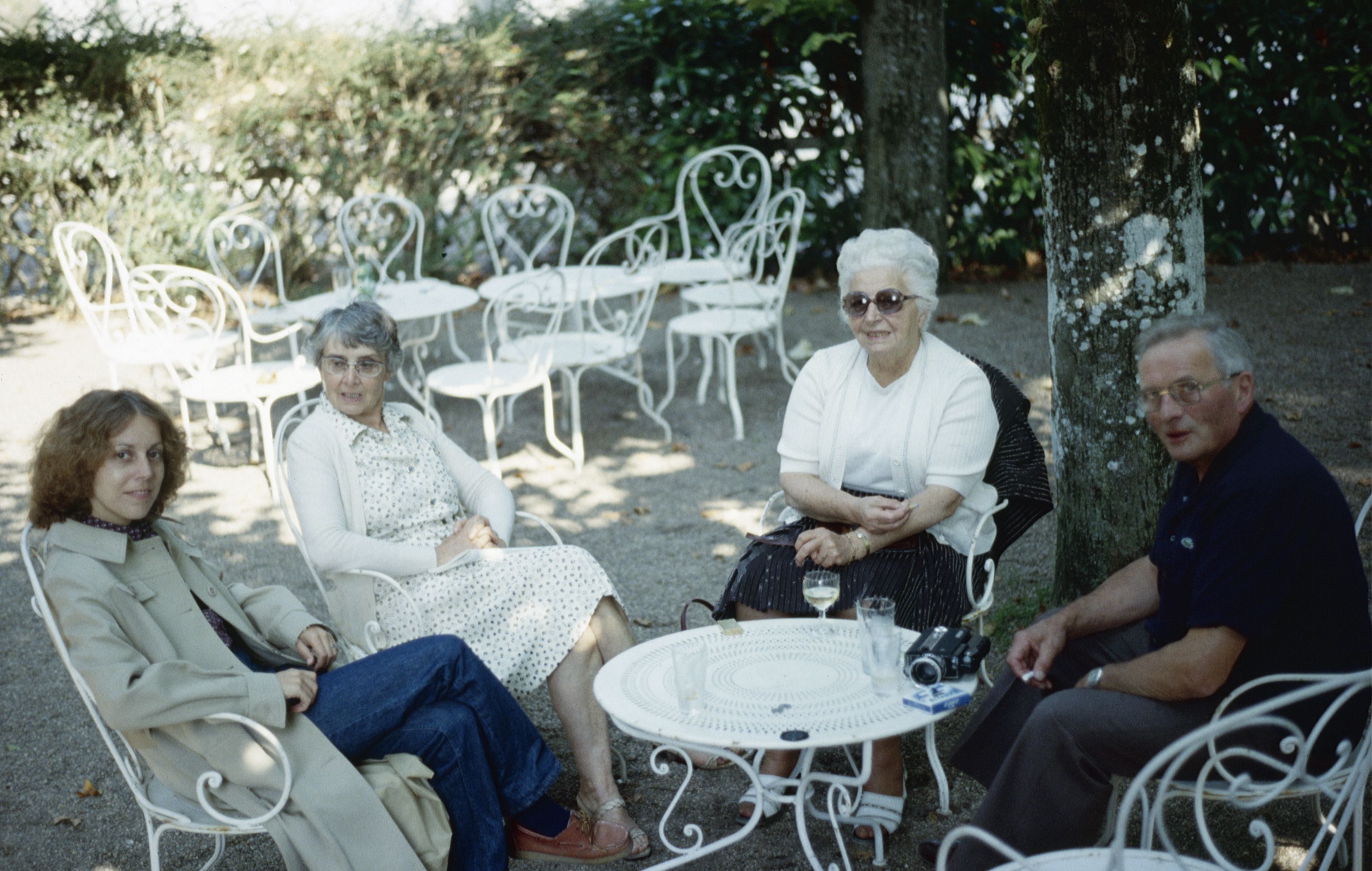

Earlier that day, hunger had forced us to stop at a tiny bar in a forgotten little town. From outside, the music was loud; inside, it was even louder. We chose to sit outdoors, but even there, the thumping melody followed us. When Clare went inside to use the restroom, she discovered it was simply a hole in the ground, with two slabs to stand on. She returned outside shaking her head, equal parts horrified and amused. Not every travel moment is glamorous — some become funny stories decades later.
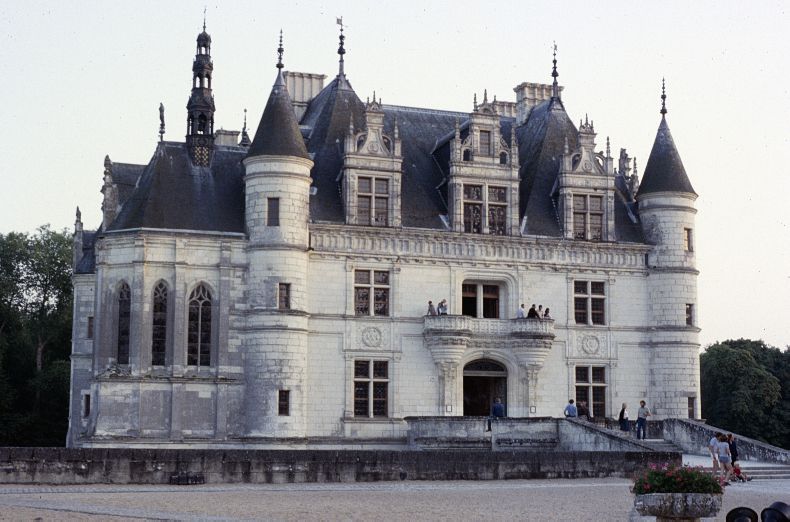
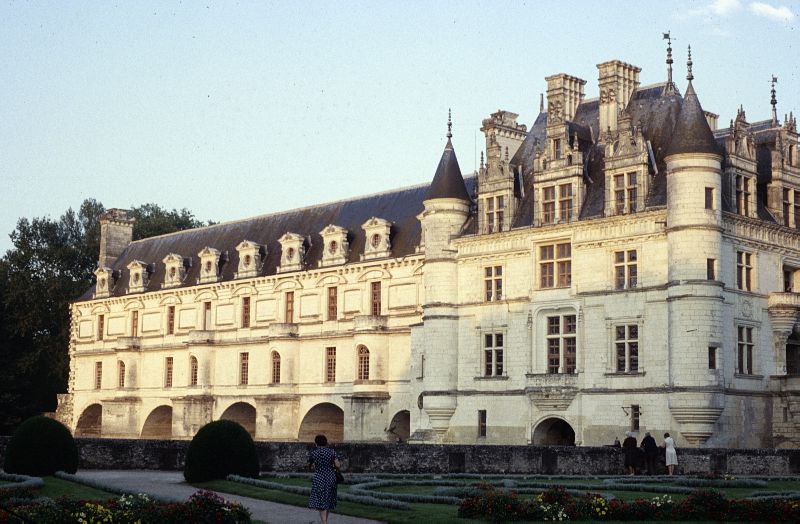
On our final day in the Loire Valley, we visited Château de Chenonceau and Chambord, perhaps the grandest and most elegant of all the châteaux. With its towers, terraces, and elaborate roofline, it felt like something taken straight from a fairy tale.


But soon it was time to leave. We packed into the car again, heading toward Prissé, though not without more thrills on the road. Country drivers in France move at breakneck speeds, and Valentin was no exception. Marc and Clare exchanged more than one nervous glance as he passed cars on narrow lanes and barreled down the autoroute at nearly 140 km per hour, fog or no fog.
By the time we dropped Madeleine in Macon and continued toward Prissé, we were ready for a quieter pace — and perhaps a slower driver. Little did we know that the hospitality waiting for us there would become one of the warmest memories of the entire trip.
Arrival in Prissé: Wine, Family Stories, and Country Hospitality
When we finally reached Prissé, the countryside opened into vineyards and old stone houses that felt as if they’d grown naturally out of the land. We pulled up to a charming old farmhouse where Marguerite and François were waiting, both practically vibrating with excitement. Marguerite, in particular, looked as though she might burst with happiness. Clare later said she’d never been welcomed anywhere with such open affection.
Marie Rose led us upstairs to the room where we’d be staying — a cozy, private space in what she called “the penthouse,” though it felt more like a snug attic hideaway than anything grand. The house itself was decorated in antiques, a mix of rustic charm and family history that immediately made us feel at home.
After washing up, we came downstairs for a simple supper: soup, bread, cheese, and — naturally — more wine. But the best part wasn’t the meal. It was the conversation. Something shifted now that Marguerite was there to help with translation. The Girards, suddenly far more talkative, began sharing stories, and even François — always the charmer — joined in with the help of a dictionary, slipping in French words and laughing at his own efforts.
The cheese came from Valentin’s fromagerie, and it was excellent. At one point, Marguerite announced that Clare was “too thin” and needed feeding. She presented Clare with a cheese that had a texture much closer to yoghurt, mixed with sugar. Clare loved it. Food, here, wasn’t just nourishment — it was affection served on a plate.
When it was time for bed, Marguerite insisted on escorting us upstairs. At the top of the stairs, she told us to “sleep until noon” and — with a mischievous grin — to “make some babies.” Clare and Marc both burst into laughter. Some pieces of advice cross all cultural boundaries.
The next morning, the house was quiet except for the rooster that had served as our alarm clock. We came downstairs to find breakfast waiting: coffee, toast, honey from Marie Rose’s beehives, and homemade jam made from fruit grown just outside the window. Everything tasted fresh, as if the countryside lived in every bite.
Marie Rose proudly took us on a tour of her garden — a sprawling mix of vegetables, fruit trees, and flowers. We tasted grapes right off the vine and peeked into the root cellar, which held rows of wine organized by region, along with apples, potatoes, pears, and enough stored food to last a family through winter. She also kept chickens and a rabbit, making the whole place feel alive and bustling, even in its quiet rural way.
Later in the morning, François announced that he wanted to show us something special — a place at the base of a cliff filled with fossils of horses and men. We drove past miles of vineyards before arriving at a large rocky outcrop. The climb was steep, but the view at the top was worth every step: a sweeping panorama of the countryside and even a glimpse of Mont Blanc in the distance.

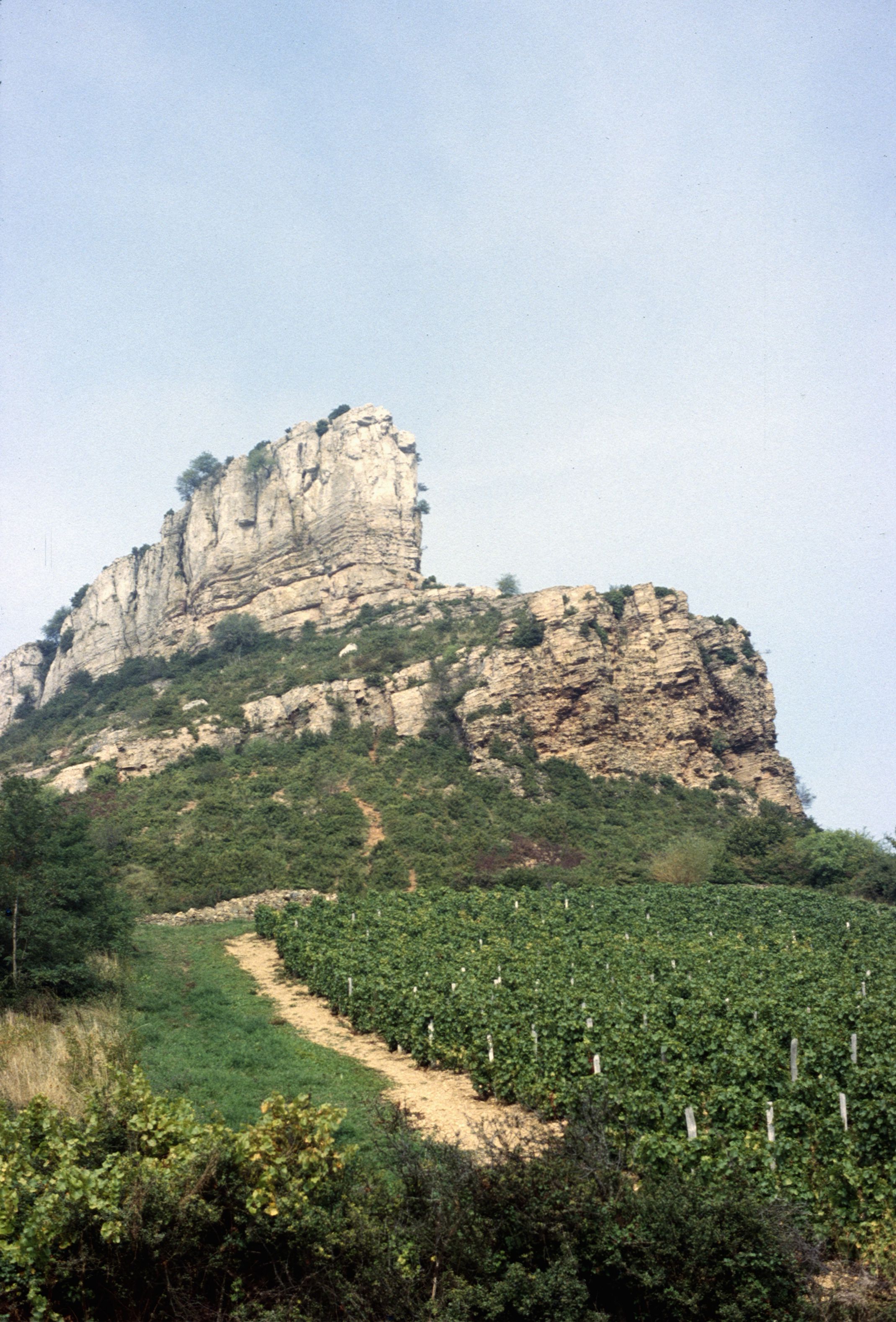
After returning to the farmhouse, Marie Rose prepared a large lunch, and then we set out again — this time for an outing planned by Marguerite. With François driving, the three of us headed to the Hôtel-Dieu de Beaune, a historic and beautifully preserved medieval hospice. From there, we continued to a wine cave for a tasting.
To our surprise — and delight — the cave belonged to Patriarche, one of our favorite wine producers. We walked through vast underground cellars lined with old bottles, the air cool and heavy with the scent of oak and time. Marguerite walked slowly, calling herself “an old one,” and Clare and Marc took turns helping her along, arm in arm.
At the end of the tour, we were handed three glasses of wine to taste. Everyone was friendly, and the atmosphere felt festive. In one room, there was a bust of Patriarche himself: women stroked the beard for luck; men stroked the hair. Clare sat with Marguerite, listening intently as she shared stories about the family — stories Clare would later say were among her favorite memories from the trip.
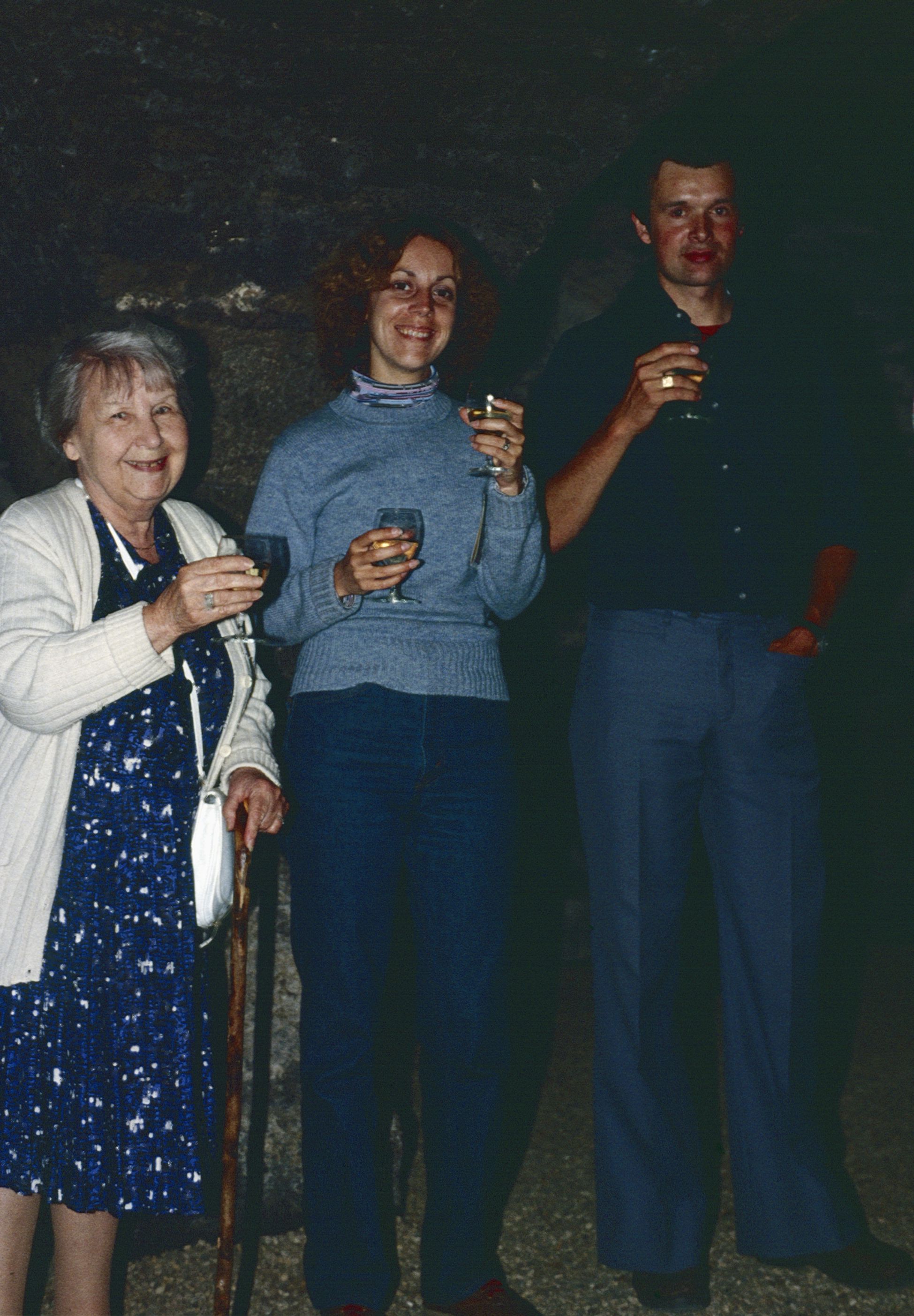
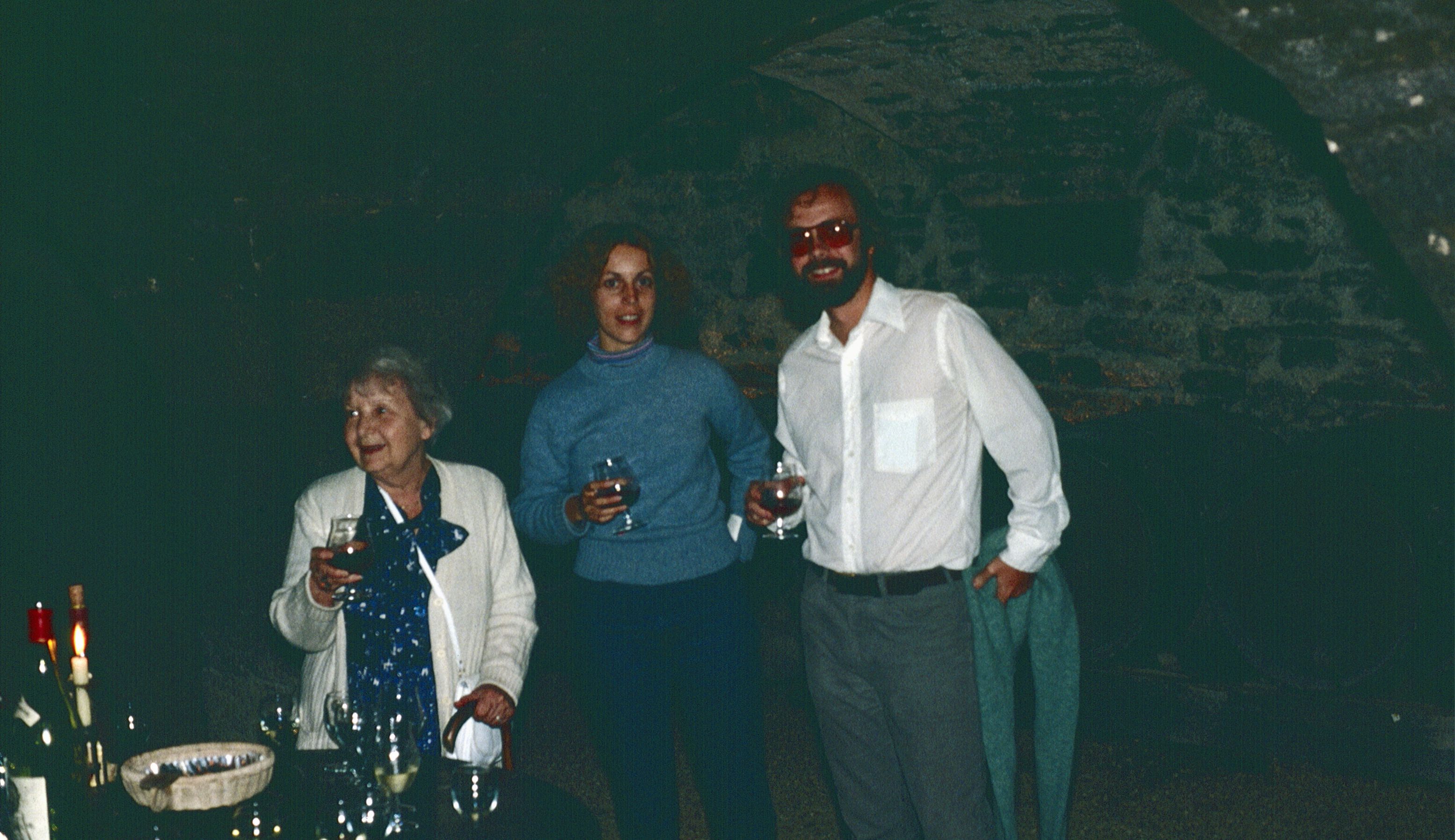
When we returned to the farmhouse that evening, dinner was served along with more wine — always more wine. Marc soon realized that whenever his glass began to empty, someone would fill it again. And just when he thought he couldn’t possibly drink any more, out came the champagne.
By the time the evening ended, the two of us practically staggered upstairs to bed — full, happy, and surrounded by a warmth that had nothing to do with the wine.
Into the Alps: Grenoble, Mountain Roads, and a Warm Swiss Welcome
On Wednesday morning, the sun was barely up when we stepped outside with François, ready to head toward Grenoble, the city he called home. Before we left Prissé, Marguerite cut a single rose and handed it to Clare with a smile that said everything words could not. It was such a simple gesture, and yet it stayed with us — a tiny emblem of the affection we’d been shown in that farmhouse.
Along the way, François made a stop to pick up his hunting dog, a friendly creature who wagged his tail as though delighted to be included. Clare was startled, however, when François opened the trunk and ushered the dog in without a second thought. She whispered to Marc, “Is he… is he putting the dog in the trunk?” Marc merely shrugged, as if this were just another charming, puzzling European custom.
When we arrived in Grenoble, we climbed up to François’s apartment where we met his roommate — also named François — who greeted us in excellent English. They took us to a small restaurant for lunch, warm and lively, tucked between narrow streets framed by the rising silhouette of the Alps. After returning his roommate home, François became eager to show us “his mountains,” and off we went.
The drive was beautiful, thrilling, and utterly nerve-wracking. The roads carved into the mountainsides were impossibly narrow, winding back and forth with nothing but open air beyond the edges. Drivers flew around bends at full speed — as if sheer cliffs were nothing to worry about — while Clare and Marc held their breaths through half the journey. But the views were spectacular: jagged peaks cutting into the sky, valleys unfolding in shades of green and slate, and villages balanced on cliffsides as though defying gravity.
Back in Grenoble that evening, we wandered the shop-lined streets, peering into windows, watching the locals stroll arm in arm under the soft glow of street lamps. Supper was simple: bread, cheese, and wine — always wine. Clare noticed something amusing: no one ever saved a cork. The idea of leftover wine seemed almost sacrilegious. She remembered how, back in Paris, Pierre had stared at Marc as though he were slightly insane when Marc tried to put a cork aside for later.
Up the Grand Mountain
Thursday began before sunrise. François had planned an excursion “up the Grand Mountain,” and to this day, both Clare and Marc agree it was simultaneously one of the most stunning and terrifying drives of their lives.
The road was so narrow that only one car could pass at a time. The rules were clear: the car going up had right of way; the one descending needed to back into a tiny carved-out space — called a garage — built into the cliff. There were no guardrails. Just the road… and then a sheer drop.
François explained, quite casually, “Many tourists become paralyzed on these roads,” a statement that did little to comfort his passengers.
At one point, they had to stop completely: a shepherd was herding 600 sheep, goats, and dogs straight down the mountain, the entire road swallowed by wool and hooves. Clare laughed with delight; Marc gripped the seat; the hunting dog barked indignantly from the trunk.
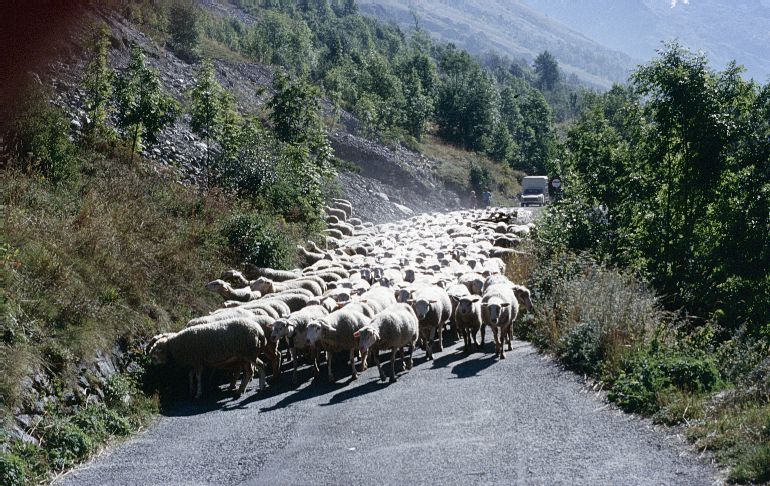
At the summit, everything opened into silence and sky. They stepped out into the crisp air, staring at the panoramic sweep of the mountains. François finally freed the dog for a breath of fresh air, and the poor creature bounded out joyfully, stretching its legs after hours in the dark.
Tiny villages clung to cliffs all around them — houses perched so precariously that one wondered how they stayed upright. François told them that during heavy snowfalls, entire communities could be cut off for a week.


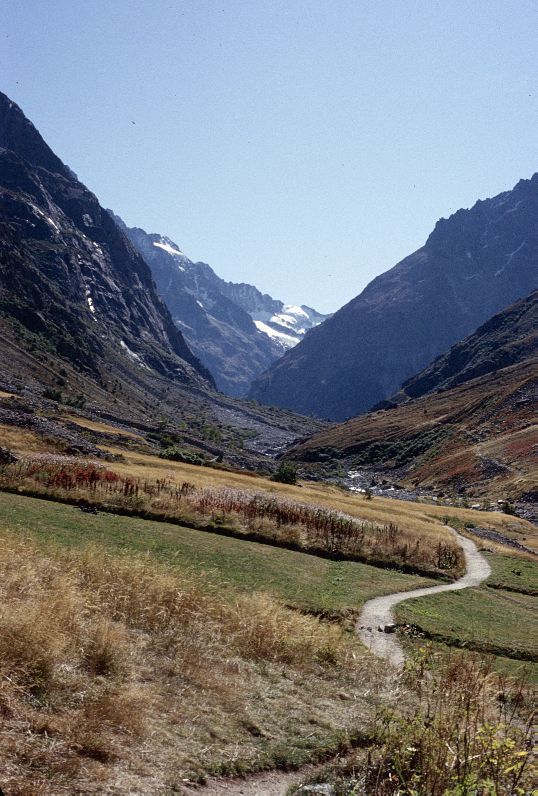

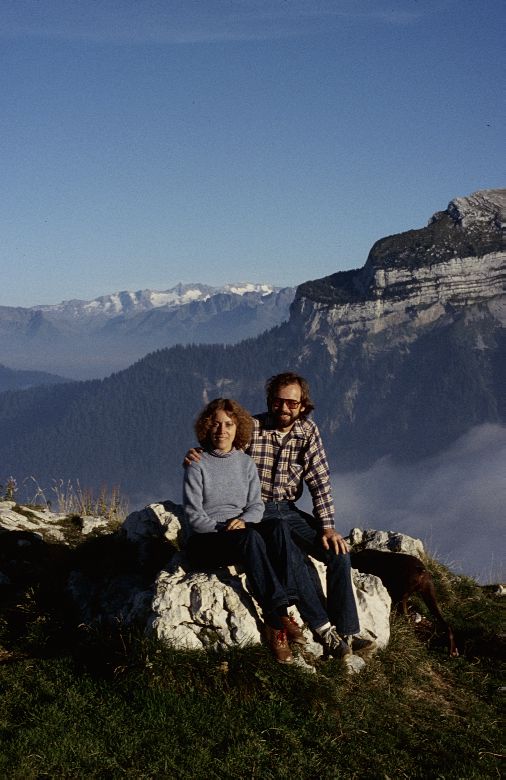
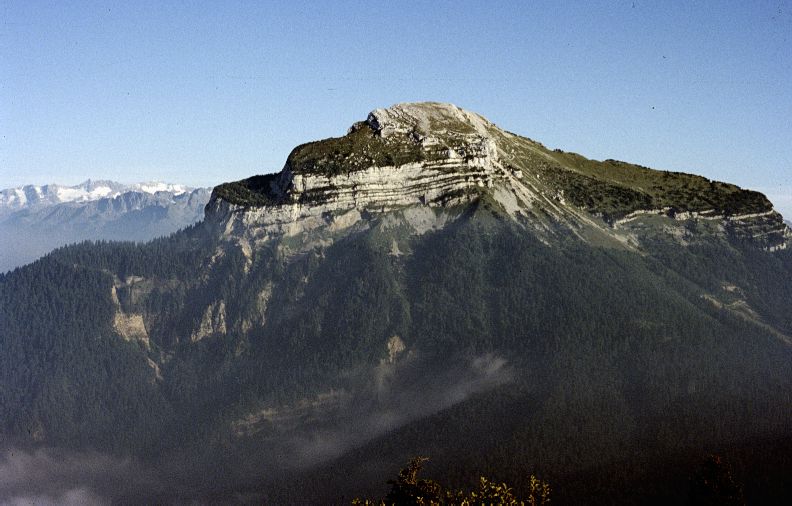
The descent brought them to a small restaurant where they enjoyed lunch before heading to the train station. They were supposed to catch a train around 3 p.m. to Geneva — but they missed it. François called Danielle to explain, unbothered by the setback.
With time to spare, François excitedly took them to see his new apartment, which he was in the process of buying. He beamed as he showed them each room. His pride was infectious, and Clare and Marc found themselves genuinely happy to share in his joy.
Eventually, they caught the next train to Geneva, where they hugged François goodbye, promising to welcome him — and Pierre — anytime they wished to visit the United States.
A Swiss Welcome
When the train rolled into Geneva, Marc’s uncle Michel was waiting on the platform. Clare immediately noted how well Michel spoke English — better than Marc’s mother, and with much less accent. Michel drove them to his home and gave them a quiet tour before excusing himself for an evening meeting. He and Danielle would be back late, which suited Clare and Marc just fine. After so many long days, the promise of an early bedtime felt like a gift.
The days in Geneva unfolded gently. Marc knew the city well from his student days ten years earlier and acted as Clare’s guide whenever Michel was busy. Michel asked one afternoon whether they’d like to swim in Lake Geneva. It sounded idyllic, and they agreed. Marc had worn his swimsuit under his clothes, expecting a discreet changing area somewhere along the lake.
Instead, Michel walked down to the shoreline, removed his business suit completely, and calmly put on his bathing trunks right in public. Marc whispered, “At this point… why bother?”
Later, Michel’s son Yves invited Marc to hear his new sound system. Marc followed him into Yves’ room, and Yves cranked up the volume. Marc loved it. When they returned to the living room, Michel looked distinctly unhappy.
During our stay, we also had a wonderful afternoon arranged especially so we could visit Pape. Although he never adopted my mother, we always considered him our grandfather. Danielle prepared a lovely dinner, and the whole family gathered—Michel, Yves, and Stéphane. It meant a great deal to me that Clare could finally meet everyone in person, matching names to faces and stepping into the family stories she had heard for years. The atmosphere was warm and familiar, filled with gentle teasing, shared memories, and a quiet affection that made the evening feel deeply special.

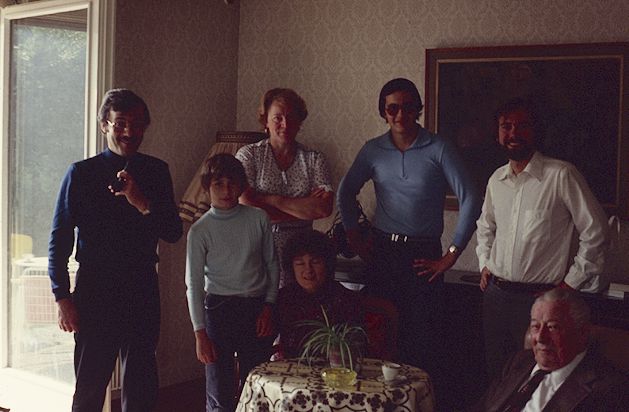
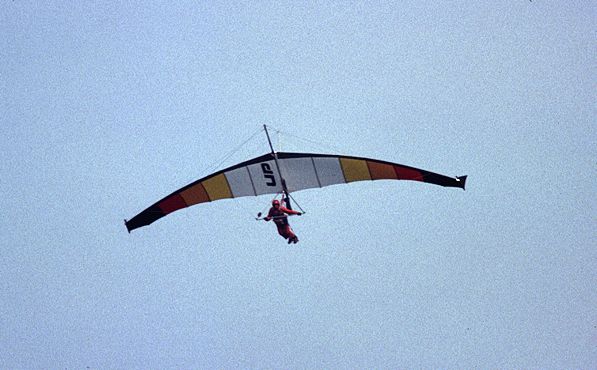
One afternoon, they walked to the Jura Mountains, where they watched people leap from cliffs with hang gliders, drifting like birds against the pale blue sky. Clare found it terrifying; Marc found it mesmerizing.
The Journey Home
When they finally boarded the plane back to the United States, they felt a mix of exhaustion and exhilaration. This first grand adventure — Paris, Normandy, the Loire Valley, the countryside of Burgundy, the Alps, and Switzerland — had been more than a vacation. It was a journey of family, discovery, shared fear, shared laughter, and the unexpected kindness of people who treated them not as tourists but as kin.
Clare was glowing. Already talking about the next trip.
Marc, too, felt changed. They had met relatives who embraced them immediately, shared wine and stories, opened their homes, and left them with memories that would never fade.
They always looked back on that trip as something extraordinary —
the beginning of all the travels that would follow.
 Marc's Travels