The Best of Spain
Stop me if this sounds familiar: you want to explore Spain — really see it, not just tick off landmarks — but the thought of managing all the logistics yourself? Not appealing. You’re after cultural depth, not just sightseeing, but you also want it to feel like a holiday.
That’s why Clare and I chose The Best of Spain: Barcelona and Madrid with Road Scholar. We’d traveled with them before, so we knew the basics — strong guides, thoughtful itineraries, and like minded travelers. But each trip is its own experience, and this one didn’t disappoint. If an army marches on it’s stomach as Napoleon quipped, Barcelona is the place to be and I agree wholeheartedly.
From the stunning sights of Barcelona to the historic charm of Madrid and Toledo, it was a trip full of surprises. Our group leader, Sonia Formoso, was exceptional. The group itself? Even better. Add in great food, smart planning, and a few handy lessons learned — like why you might want to avoid a lower-floor room in Barcelona — and you’ve got a trip worth writing about.
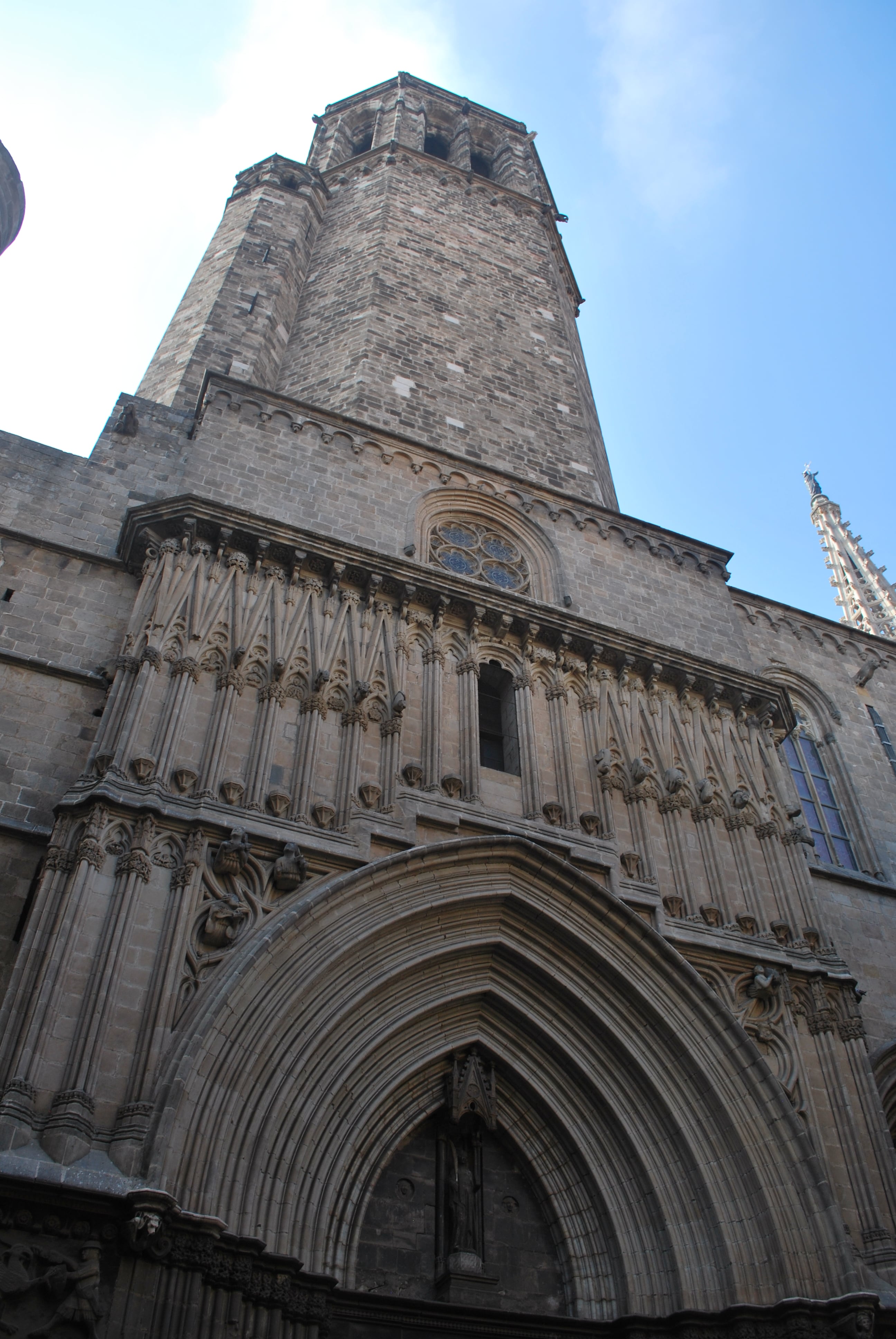
We stayed at the Hotel Catalonia Diagonal Centro. The accommodations were good but a tip is not to get a room on the lower floors. There is a metro line under the hotel so some guests complain about the rumbling from the metro. We’d been tipped off so we asked for a higher floor. Once situated, Clare and I took off to the Cathedral of the Holy Cross and Saint Eulalia. There were a fair share of panhandlers in the area.
In this blog, I’ll walk you through what we saw, what stood out, and what you might want to know if you’re thinking about this tour yourself.


The church itself was rather magnificent but little did I know, I was going to be overwhelmed by another, newer, church in Barcelona.


La Sagrada Familia has to be beyond compare. In 2017, construction was in its 135th year and only 70% complete. I’ve seen a great many cathedrals in Europe but I can honestly say, none compare to La Sagrada Familia. Construction began in 1882 for the Sagrada Família under architect Francisco de Paula del Villar. Antoni Gaudí took over as chief architect in 1883 when Villar resigned, transforming the project with his architectural and engineering style, combining Gothic and curvilinear Art Nouveau forms. My photos hardly do the Basilica justice. First you will see the Gothic side then the Art Nouveau side, before seeing the inside with sunlight illuminating the inside.


We were also given a tour of one of Gaudi’s designed building, the Casa Milà, and the Park Güell. Unfortunately, I suffer from acute acrophobia at times and I was almost unable to stand up when on the roof of the building.


Park Güell is a reflection of Gaudi’s naturalist phase where he was inspired by designing towards natural shapes.


Two other items to note in Barcelona that caught my eye were the bull fighting arena and some of the street lights which have bats adorning the top.


And what can one say about the open markets in Europe but that I want them here in the USA. I couldn’t resist taking a shot of the restaurant, Wok To Walk.


While in Barcelona, Road Scholar took us to the Monastery of Montserra and we did see the The Black Virgin of Montserra. It was foggy when we arrived which reminded me of Clare and my visit to Mont-Saint-Michel that we visited years ago. The line to see the Black Madonna (unfortunately, no pictures) wasn’t too bad and fortunately, we got there early. Later the line was much longer. We were also able to see the L’Escolania boys’ choir of sopranos and altos from the Benedictine abbey Santa Maria de Montserrat. The choir sings every day in the Basilica of Montserrat. The museum is also worth the time to visit with a fare number of paintings and sculptures.


Next, we visited Toledo, the “City of the Three Cultures” for the cultural influences of Christians, Muslims and Jews. Toledo is known as the “Imperial City” since Charles V, Holy Roman Emperor, held court there. Toledo was declared a World Heritage Site by UNESCO in 1986.


Be sure and visit the Cathedral of Saint Mary of Toledo. I’d also recommend the Synagogue of El Tránsito and the Mosque of Cristo de la Luz.


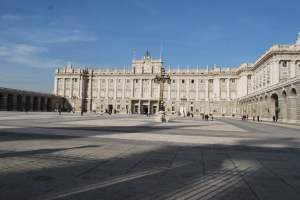
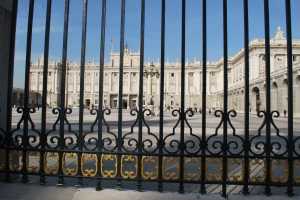
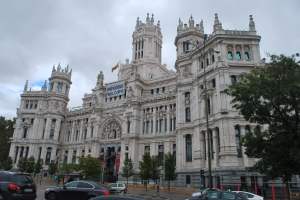
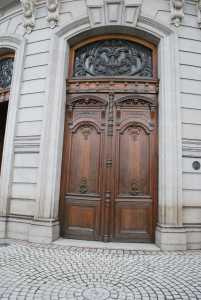
Madrid certainly looks the part of a capital city with it’s broad boulevards, palaces and many statues. It does not disappoint. My only regret is that we didn’t spend longer in Madrid and I didn’t feel that we saw enough of the city. As in most European cities, there are mimes and they expect a tip.

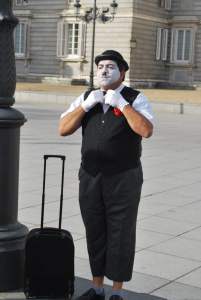
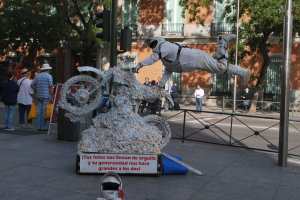
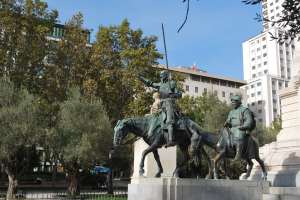
The statues are literally all over the city. Here are some that caught my eye. Goya, Don Quixote and Sancho Panza, the giant frog, dubbed “The Frog of Fortune” in front of the Casino Gran (good luck with that), Christopher Columbus, puzzled woman, voluptuous Botero statue of nude woman, and street corner maker.

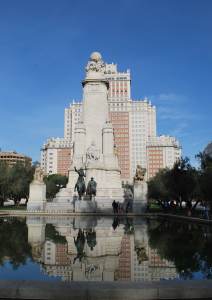
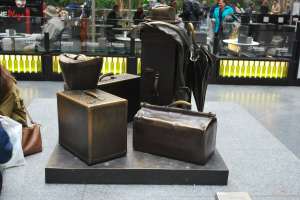
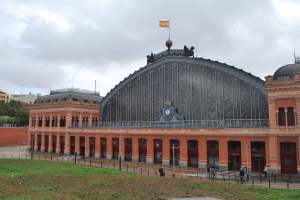
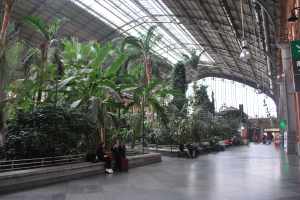

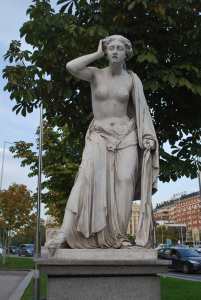
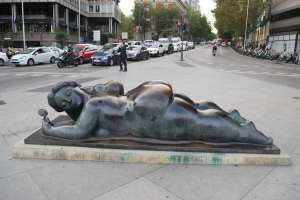
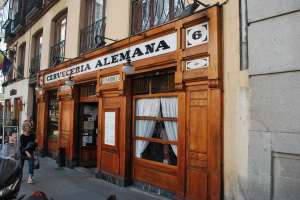
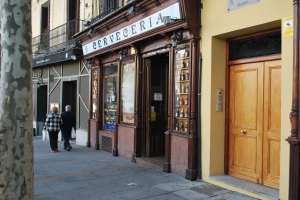
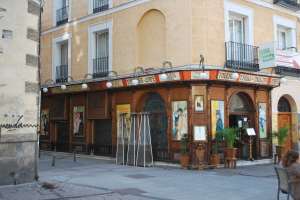
We found this wonderful square walking around the city. Many open air restaurants to try and just sit back and people watch. There is the palace and the cathedral just across from it and other magnificent buildings to see in Madrid. Don’t neglect the train station, it’s also worthwhile to spend an hour or so to check out. We went to two museums and both were great. As I said, I wished we’d had more time.
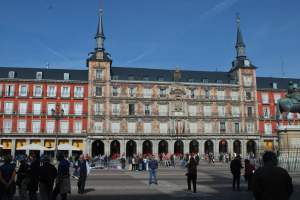
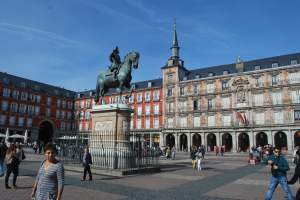



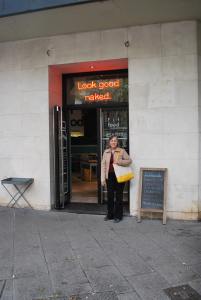
A lot of interesting places to eat. We didn’t try “Look good naked” but it did catch our eye.
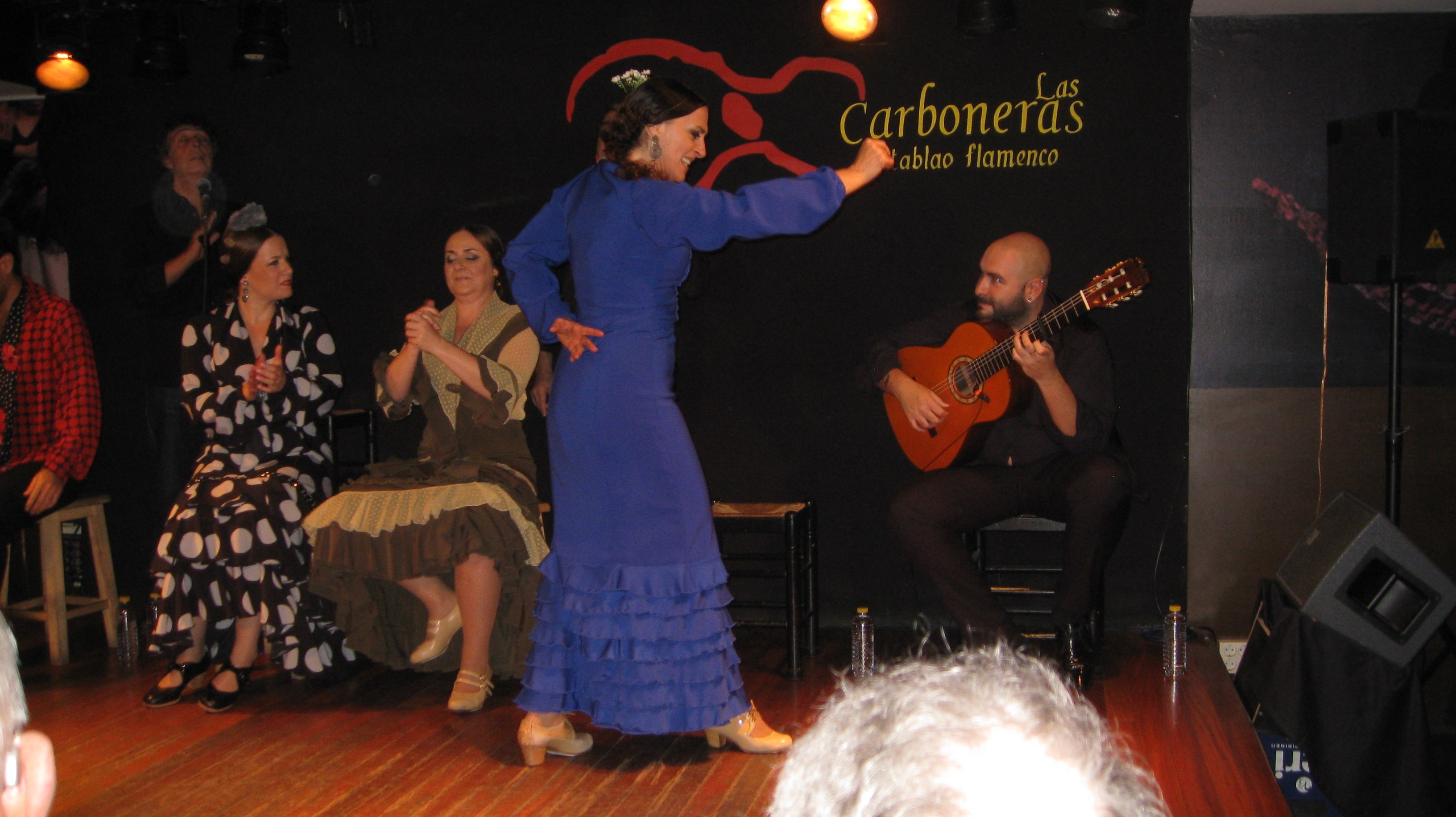
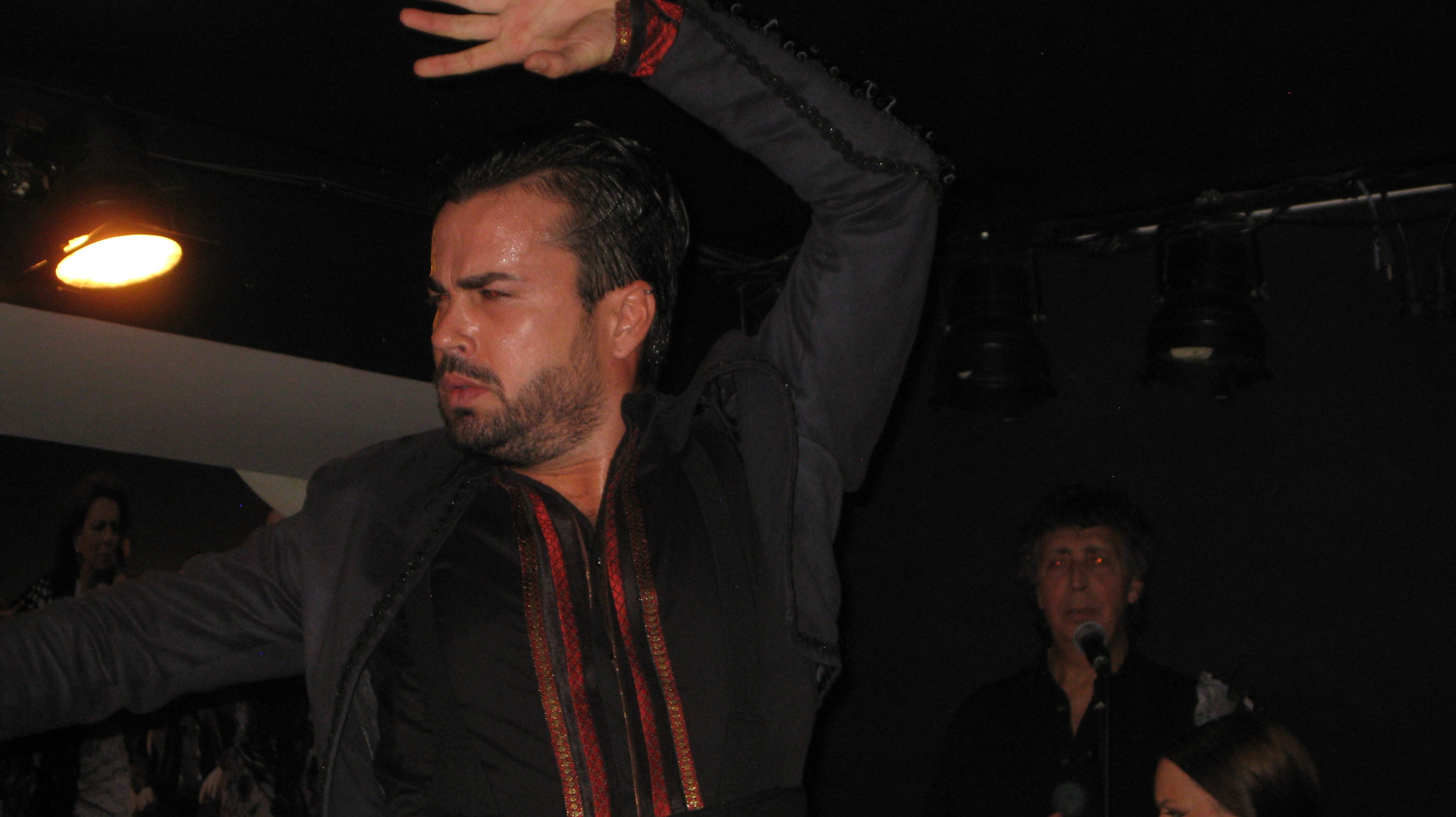
Without a doubt, take an evening to go see the Flamenco Dancers, it’s well worth it.
 Marc's Travels