Sedona is magical. The Grand Canyon is majestic. And experiencing them together on a single trip? Utterly spellbinding.
One of the most striking sights in Sedona was Thunder Mountain—also known as Capitol Butte or Grey Mountain. Towering over West Sedona, this dramatic peak gets its name from the many lightning strikes that hit it during storms (or so the locals say). Its sheer size and energy seemed to pulse with the spirit of the land.
We travelled with Road Scholar, and the trip was a feast for the mind as much as it was for the eyes. It was exceptionally well-managed, combining educational depth with some of the most stunning visual backdrops I’ve ever seen—images that will stay with me for years to come.
Sedona itself was named after Sedona Arabella Miller Schnebly, the wife of the city’s first postmaster. The region’s signature red and orange rock formations come from oxidised iron minerals in the stone—essentially, rusted rock glowing in the desert sun. It’s these layers of colour that make Sedona feel otherworldly, like stepping into a vivid painting.
One of the highlights of the trip was a geology lecture at the Grand Canyon by Dr. Stanley Beus, Professor Emeritus of Geology at Northern Arizona University. He explained how the landscape we were standing on came to be, layer by layer, over millions of years. I left with a much deeper appreciation of both Sedona’s striking terrain and the Grand Canyon’s sheer immensity.
If you’re curious to see the Grand Canyon in a way most never do, I highly recommend The Grand Canyon: Between River and Rim by Pete McBride and Kevin Fedarko. Their 750-mile documented trek along the Colorado River is visually jaw-dropping. I had the chance to hear McBride speak about the journey, and I was completely awestruck.
Hearing his story left me wondering: Should access to the Grand Canyon be more tightly controlled to preserve its natural wonder? It’s a question that still lingers.
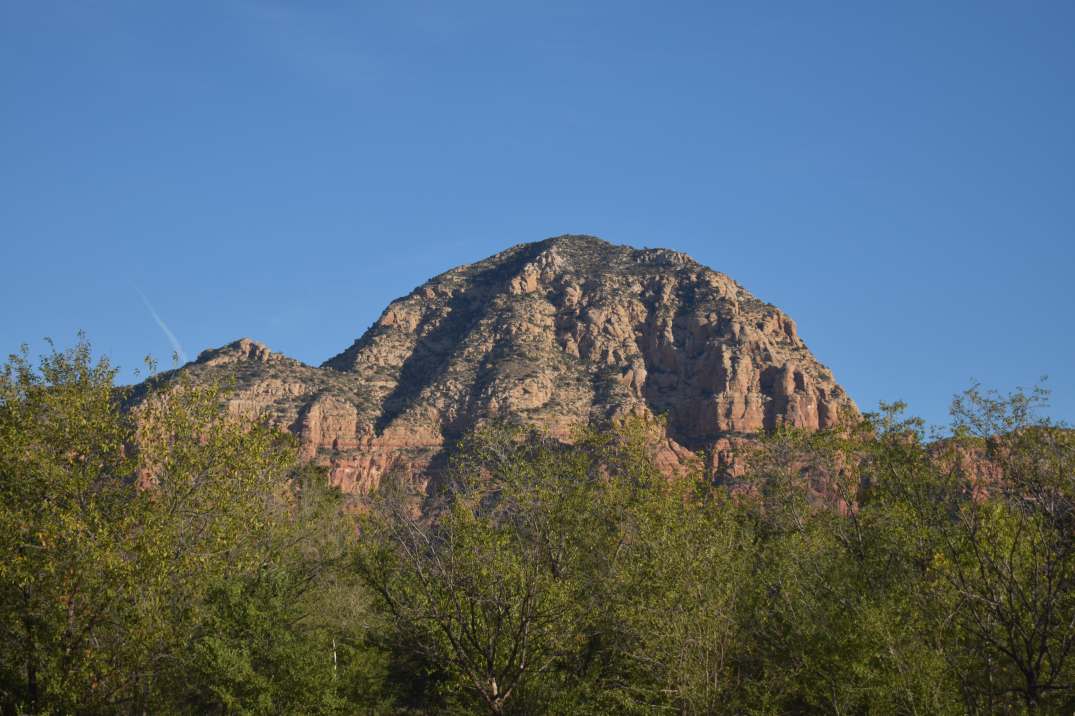 The formations around Sedona are awe inspiring.
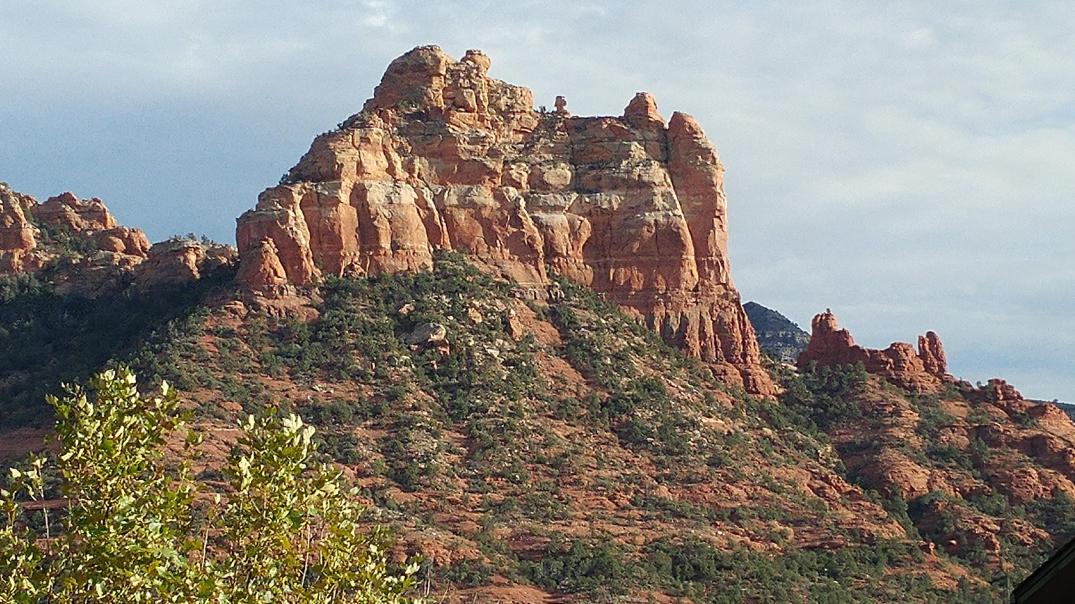 Teapot rock is a pretty interesting formation from different vantage points.


Another unforgettable stop on our trip was the Chapel of the Holy Cross, a Roman Catholic chapel dramatically built into the red buttes surrounding Sedona. The structure looks as though it emerges straight from the rock—a fusion of nature and architecture that feels both grounded and transcendent.
The chapel was the vision of Marguerite Brunswig Staude, a local rancher and sculptor who commissioned its construction. Built on Coconino National Forest land, it was completed in 1956 in just 18 months at a cost of $300,000—a remarkable feat considering the terrain and era.
Its modernist design stands in serene contrast to the rugged cliffs around it. Whether you’re religious or not, the view from the chapel—and the stillness inside—offers a kind of quiet reflection that’s hard to describe.


Some of the interesting formation around the Chapel have been named “Madonna and Child” and “praying hands”.


Some of the rock formations I found very interesting.


You can’t miss the Bell Rock but the Courthouse was a little harder to find.


Our journey also took us to Montezuma Castle National Monument, nestled in Camp Verde. This five-story, 20-room cliff dwelling is built 90 feet up a sheer limestone cliff, overlooking the floodplain of Beaver Creek. It’s one of the best-preserved cliff dwellings in North America, constructed around 600 years ago by the Sinagua people—a pre-Columbian culture closely related to the Hohokam.
Walking through the area, you can’t help but marvel at the engineering and resilience it must’ve taken to create such a structure. The trail along Wet Beaver Creek is equally rewarding, with a surprisingly diverse ecosystem and glimpses of unique desert fauna—quiet moments that slow you down and ground you in the landscape.
Nearby, the history takes a heavier turn. While the Yavapai and Apache tribes are distinct in culture and identity, they were forcibly relocated together in 1871 when settlers and the pursuit of gold surged into the Verde Valley. This chapter of displacement is memorialized at the Exodus Monument, where a sculpture shows an elderly man carrying his disabled wife as they leave their homeland—an image that stays with you long after you’ve walked away.
It left me wondering: will we ever truly understand and honor the traditions of those who came before us? Or will history continue to be overwritten in the name of conquest?


One of the more thrilling parts of the trip was our Pink Jeep tour through the Coconino National Forest. These bright, bubblegum-colored 4x4s might look playful, but they’re built for rugged terrain—and driven by guides who know every inch of it. Bouncing over red rocks, winding through juniper forests, and stopping at viewpoints you can’t reach on foot, this tour gave us a front-row seat to the geology and plant life of the region.
At one point, a brief desert shower rolled in—an unexpected bonus. Watching the rain move through this arid landscape, darkening the sandstone and releasing the earthy scent of wet rock, added a whole new layer to the experience. It made the landscape feel alive and ever-changing.


A white-capped volcano in Arizona—who knew?
I certainly didn’t, until I discovered that Arizona is home to 28 volcanoes, including four extinct ones just north of Flagstaff, where these photos were taken. The contrast is startling: snowy peaks rising out of the high desert, hinting at the state’s wild geological past.


And then there’s the Grand Canyon. No matter how many times you see it in photos, nothing prepares you for the real thing. It almost doesn’t look real—more like a mirage, or a painting too vast to be fully grasped. It’s the kind of view that makes you stop talking, stop thinking, and just be.
We entered the Grand Canyon from the eastern rim at Desert View, a quieter and less crowded approach that offers its own unforgettable moments. One of the standout landmarks there is Mary Colter’s Desert View Watchtower, completed in 1932. Designed to blend into the canyon’s landscape, the tower looks ancient, though it’s less than a century old.
Inside, you’ll find a number of petroglyphs, which are actually faithful reproductions of rock art originally found in Abo, New Mexico—art that has since been lost or destroyed. The space feels sacred, like a quiet tribute to the cultures that lived here long before highways and lookout points.
Outside, a solemn plaque commemorates the 1956 mid-air collision between two commercial airliners—TWA and United Airlines—that crashed over the canyon, killing all 128 people aboard. It’s a stark reminder of how layered this place is: natural wonder, cultural heritage, and human history all colliding in one sweeping view.


One of the most memorable moments came early—6:00 AM early, to be exact—when we woke up to watch the sunrise over the Grand Canyon. By 6:30 AM, the canyon was bathed in a soft golden light, its vastness and stillness magnified by the early hour. It was utterly spectacular… but also freezing. If you’re visiting in November, take my advice: bring a coat and gloves. My fingers were frozen, but I wouldn’t have missed it for anything.
Later that day, we explored the El Tovar Hotel and Hopi House, two cultural landmarks on the South Rim that I highly recommend visiting. The El Tovar Hotel, named after Spanish explorer Pedro de Tovar, was built in 1905 and was considered one of the finest hotels of its time. It had electric lights, fresh water, and even fruits and vegetables for guests—a luxury back then, especially in such a remote setting. Today, it still carries a sense of old-world charm and impeccable service.
Just steps away, the Hopi House—also built in 1905 and designed by Mary Colter—was envisioned as a place for Hopi artisans to live, work, and sell traditional Native American crafts. The design itself was inspired by the Hopi pueblo style, and walking through it feels like stepping into a living piece of history, with cultural traditions still echoing through the walls.


On the way, we made an overnight stop at a refurbished motel along old Route 66, now Interstate 41. It wasn’t your standard roadside stay—this place had old classic cars parked out front, and a mix of oddball décor and vintage Americana that gave it a real retro vibe.
We were told it was better than the newer hotel closer to the railroad tracks, where the trains thunder through all night. I believe it. The beds were firm, the night was quiet, and the place had character.
We even stayed in the Beatles room, which was decked out in fun, nostalgic memorabilia. It made the stop more than just a place to sleep—it was a little slice of the road trip experience that made us smile.


On our last day, we took a bumpy but thoroughly enjoyable ride down Peach Springs Canyon in sturdy vans. The descent brought us deep into the canyon, all the way to the Colorado River and the dramatic Granite Gorge.
The views as we wound our way down into the valley were nothing short of breathtaking. Of course, no desert journey is complete without a close encounter with a cactus—some of us discovered their prickly nature firsthand (a memorable if slightly painful lesson in local flora!).
We followed the dirt road until Diamond Head came into view—a welcome sight, as it meant we were nearing the Colorado River. We spent part of the day simply soaking it all in: watching rafters navigate the river’s currents and prospectors panning for gold, just as they might have over a century ago.
Before heading back, we took a group photo, capturing the faces behind the shared laughs, discoveries, and awe-inspiring sights of the past several days. It was the perfect way to close out a journey full of unforgettable moments.


 Marc's Travels